As an Amazon Associate, we earn from qualifying purchases. Some links on this site are affiliate links at no extra cost to you. Our recommendations are based on thorough research and editorial judgment.

When Can Babies Start Eating Solid Foods?

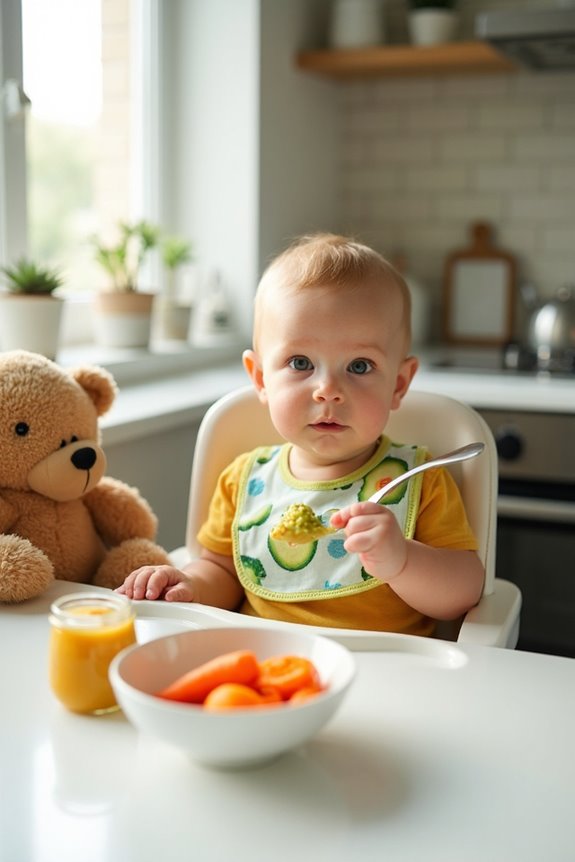
We typically start introducing solid foods to babies around six months, but it’s important to look for signs they’re ready. These include sitting up with minimal support, having strong head control, and showing interest in food. Starting with iron-rich options is best, and we should ensure a safe eating environment. Remember, watch for any reactions to new foods, and make mealtime calm and inviting. If you’re curious about more details, there’s plenty more to explore on this topic!
Key Takeaways
- Babies can start eating solid foods around 6 months, following pediatric guidelines for optimal development.
- Ensure the baby can sit with minimal support and has good head control before introducing solids.
- Look for signs of oral exploration, like reaching for food or putting objects in their mouth.
- Begin with iron-rich foods, such as infant cereals or meats, to support nutritional needs.
- Always monitor for allergic reactions and ensure a safe eating environment to prevent choking hazards.
Age Range for Starting Solids
You may be interested



When it comes to introducing solid foods to our little ones, timing is key. The solid food timeline typically suggests starting between 4 to 6 months, with 6 months being ideal for most babies. We want to ensure our little ones are developmentally ready, which often aligns with significant growth milestones.
Here’s a quick overview:
- Minimum Age: Don’t start before 4 months.
- Standard Range: 4 to 6 months is common.
- Ideal Timing: Around 6 months as per pediatric guidelines.
- Weight Check: Babies usually need to weigh about twice their birth weight before starting solids.
Signs of Readiness for Solid Foods
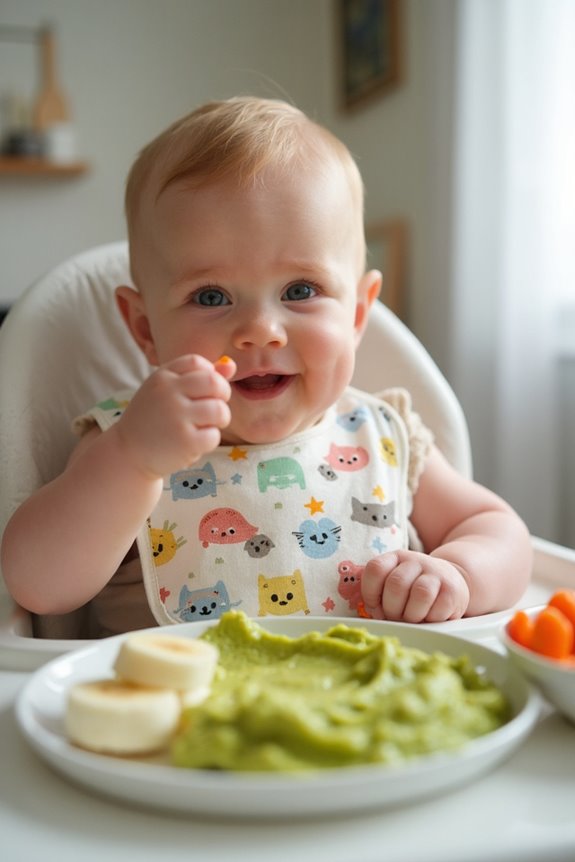
Recognizing the signs of readiness for solid foods in babies can feel overwhelming, but it’s essential for ensuring a positive introduction to new tastes and textures. When we consider baby readiness, we look for a few key indicators:
- Sitting Ability: Can your baby sit with minimal support?
- Head Control: Is their head steady while seated?
- Oral Exploration: Are they curious, reaching for food, or putting objects in their mouths?
- Tongue Movement: Do they move food to the back of their mouth instead of pushing it out?
These signs reflect their physical and behavioral readiness. Watching for this developmental progress helps us confidently navigate this exciting new stage in our little one’s journey, ensuring they’re prepared for solid foods.
Choosing the First Foods
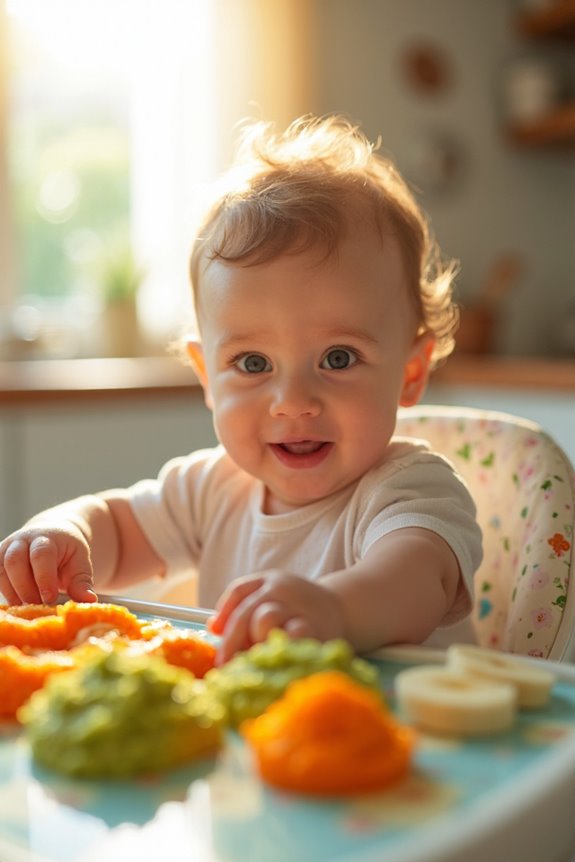
Choosing the right foods for our little ones can feel like a big responsibility, but with a little guidance, we can make the process smooth and enjoyable. When selecting first foods, we should consider a few key principles:
- Nutrient Balance: Start with iron-rich options like infant cereals or meats.
- Texture Variety: Offer both mashed and finger foods. This encourages exploration!
- Cultural Preferences: Incorporate local fruits and vegetables or traditional family dishes.
As we introduce foods, let’s stick to single ingredients to monitor reactions. This thoughtful approach not only ensures our babies get essential nutrients but also helps them appreciate a variety of flavors and textures. Remember, the goal is to create a positive experience around food!
Recommended Products

DESIGNED FOR LITTLE HANDS AGES 6 TO 18 MONTHS This clever Pre-Spoon, tailored for tiny hands, eliminates scooping and balancing struggles. Best of all, there is no wrong way to hold it, thanks to its secret: a thick contoured handle that provides a secure, no-slip grip. Ideal for use at home, daycare, or even while traveling so your baby can practice mealtime skills anywhere.

𝐒𝐄𝐋𝐅 𝐅𝐄𝐄𝐃𝐈𝐍𝐆 𝐒𝐄𝐓 – 𝟏𝟓 𝐌𝐮𝐬𝐭-𝐇𝐚𝐯𝐞 𝐁𝐚𝐛𝐲 𝐖𝐞𝐚𝐧𝐢𝐧𝐠 𝐄𝐬𝐬𝐞𝐧𝐭𝐢𝐚𝐥𝐬: This upgraded silicone baby feeding set includes a suction plate, bowl, bib with catcher, 2 large toddler spoons & forks, 2 small silicone utensils, sippy cup with snack cap, fruit feeder with cap, freezer tray with lid, and baby toothbrush – the perfect baby feeding essentials and baby led weaning supplies for 6M+. (Also ideal as assiette bebe or vaisselle bebe gift set.

DESIGNED FOR LITTLE HANDS AGES 6 TO 18 MONTHS This clever Pre-Spoon, tailored for tiny hands, eliminates scooping and balancing struggles. Best of all, there is no wrong way to hold it, thanks to its secret: a thick contoured handle that provides a secure, no-slip grip. Ideal for use at home, daycare, or even while traveling so your baby can practice mealtime skills anywhere.
Safety When Introducing Solid Foods
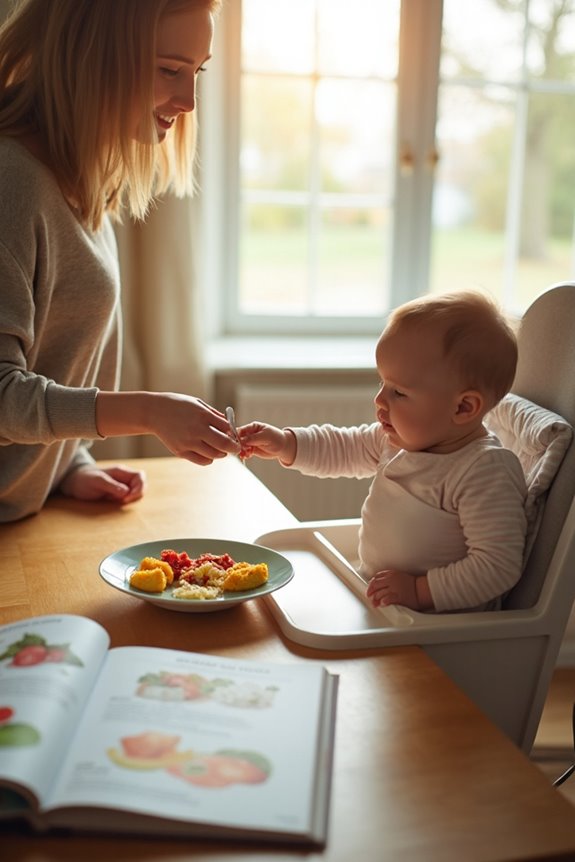
As we embark on the journey of introducing solid foods to our babies, ensuring their safety becomes a top priority. Here are some key points to keep in mind for safe food preparation and choking prevention:
- High Chair Positioning: Always place your baby in a properly positioned high chair with a harness.
- Calm Environment: Make mealtime calm and free from distractions to help your baby focus.
- Supervision: Stay within arm’s reach while your baby eats, ready to assist if needed.
- Food Safety: Prepare foods in appropriate shapes and sizes, avoiding choking hazards like whole grapes and nuts.
- Know the Signs: Learn the difference between gagging and choking to respond effectively.
Recommended Products

【Perfect Fit for Graco High Chairs】– Engineered for seamless compatibility, these replacement straps install effortlessly, providing a secure and reliable fit for your Graco high chair.

Portable - If you are doing housework, you can put your baby on a high chair, or tie it to the waist so you can free your hands to do things as you like, such as reading books, surfing the internet or others. Portable safety baby dining belt helps your baby grow up healthily by being a excellent tool.

Feeding Your Baby Anywhere: Our baby harness seat belt is designed to keep toddler safe while feeding anywhere, from restaurants to family gatherings. The adjustable straps easily attach to most chairs or even your waist, giving you the freedom to multitask while ensuring your baby stays comfortably in place
Breastfeeding and Formula During Solid Introduction
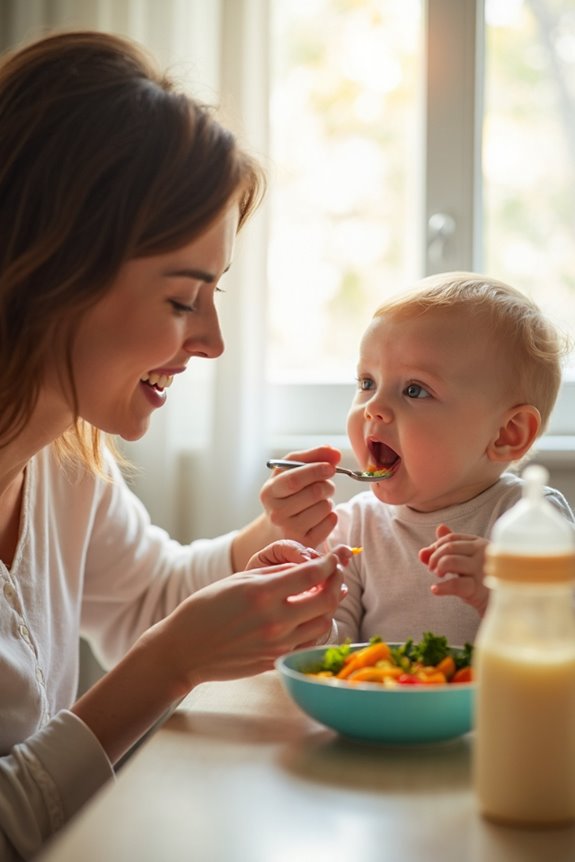
Introducing solid foods to our babies is an exciting milestone, but it’s also a time when we need to carefully consider how breastfeeding and formula fit into the picture. As we start this journey, here’s what to keep in mind:
- Breastfeeding Benefits: Breast milk remains crucial, providing essential nutrients until about six months. It complements the solids we introduce, helping balance nutrition.
- Formula Alternatives: If we’re using formula, it can serve as a solid base, offering similar nutritional support.
- Adjust Frequency: We can adjust breastfeeding or formula feeds based on our baby’s interest in solids, ensuring they remain hydrated and satisfied.
- Consult Pediatrician: Always consult your pediatrician for personalized feeding advice, making this transition smoother for both you and your little one.
Tips for Transitioning to Solid Foods
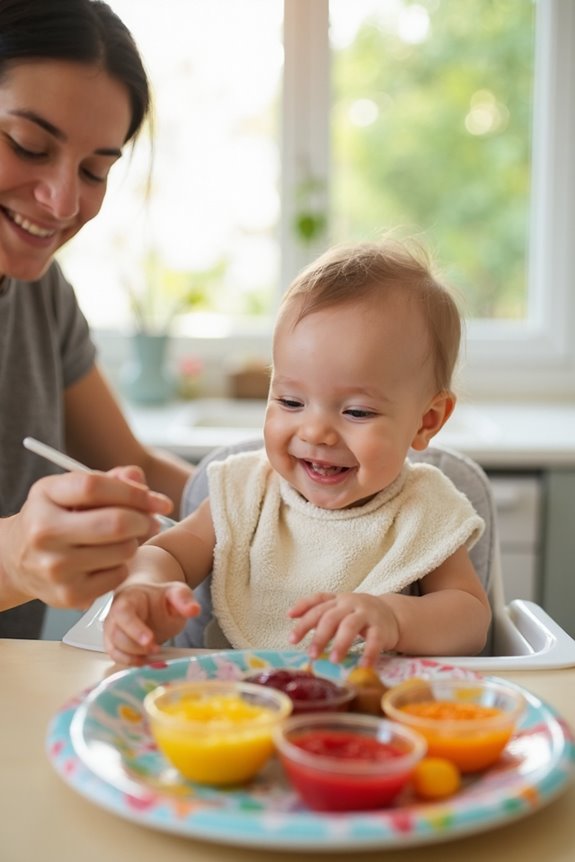
Transitioning to solid foods can feel overwhelming, but with a little preparation and patience, we can make this process enjoyable for both us and our babies.
- Start with single-ingredient purées, avoiding added sugar or salt.
- Introduce solids once or twice a day, aligning with milk feedings for a smoother transition.
- Focus on texture progression; begin with smooth foods, then gradually move to mashed or lumpy options as our babies grow comfortable.
As we increase meal frequency, let’s ensure a diverse range of foods—fruits, vegetables, and proteins—to provide essential nutrients. Remember, patience is key; some babies adapt quickly, while others may take time. By offering variety and monitoring reactions, we can help our little ones thrive in this exciting new phase!
Recommended Products

ON THE GO BABY FOOD: Gerber Stage 1 Baby Food Puree Tubs are designed for ease and convenience. These tubs are the perfect on the go baby food, made in a portable and easy-to-store format for busy parents

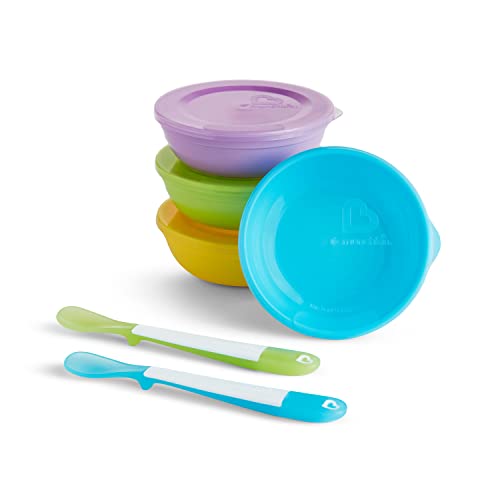
BPA-Free bowls nest nicely for easy stacking and storage
Developmental Milestones to Consider

Knowing when to introduce solid foods to our babies involves understanding several developmental milestones that indicate they’re ready for this new adventure. We should look for signs of physical readiness, including:
- Sitting Ability: Can your baby sit with minimal support?
- Head Control: Is their head steady while seated?
- Interest in Food: Are they watching us eat or reaching for our food?
Additionally, a developmental assessment is crucial. Their digestive system should be mature enough to handle solids, which means the tongue-thrust reflex should decrease. As our babies show improved coordination and stability, we can confidently prepare for this exciting transition. Remember, it’s about ensuring they’re ready physically and developmentally, paving the way for a positive eating experience.
Monitoring Reactions to New Foods

As we embark on the journey of introducing solid foods to our little ones, it’s crucial to watch for any reactions they may have to these new tastes and textures. Here’s what to keep an eye on:
- Allergy Symptoms: Look for hives, swelling, or gastrointestinal issues like vomiting and diarrhea.
- Delayed Reactions: Sometimes, symptoms can take hours to appear, so monitor closely for 1 to 4 hours after introducing a new food.
- Respiratory Signs: Be alert for coughing, a runny nose, or wheezing.
- Severe Reactions: In rare cases, anaphylaxis can occur, which is life-threatening.
Keeping a log of foods introduced and any symptoms will help us understand our baby’s unique responses, ensuring their transition to solids is both safe and enjoyable.
Establishing a Mealtime Routine
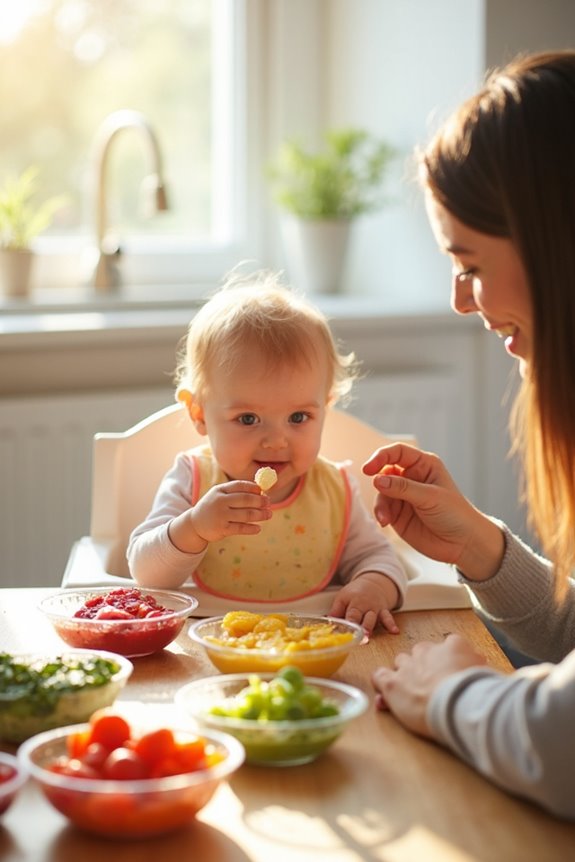
Establishing a mealtime routine is essential for helping our babies adjust to solid foods, especially since consistency can make the experience smoother and more enjoyable for everyone involved.
To create a supportive environment, we should:
- Set regular meal times to foster meal consistency.
- Start with one solid meal each day, gradually increasing to two, then three.
- Keep mealtimes calm and comfortable, minimizing distractions.
- Encourage engagement and interaction to promote eating skills.
Using positive reinforcement, we can celebrate our baby’s progress, making mealtimes feel rewarding. By monitoring their reactions and adjusting as needed, we’ll not only help them develop healthy eating habits but also create cherished family moments that strengthen our bond. Let’s embrace this journey together!
Recommended Products
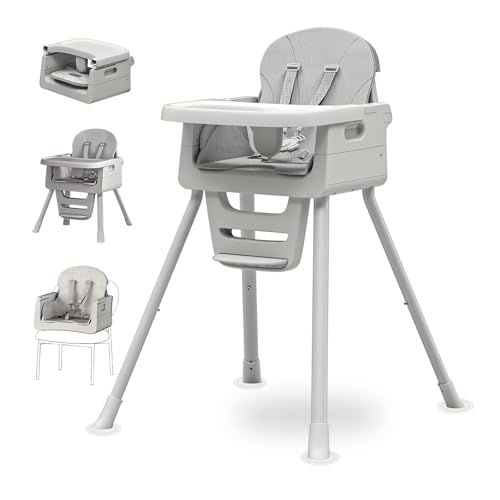
【Less Mess, More Moments Together】From messy first bites to everyday meals, cleanup shouldn’t slow you down. Just remove the tray and wipe it clean in seconds, while the silicone placemat goes straight into the dishwasher. The waterproof cushion and machine-washable harness handle spills, crumbs, and everything in between—so you can focus on enjoying mealtime with your little one.

To assemble the Ingenuity Baby Base, remove the tray, turn seat over and remove the seat back from underneath the base (tip: chair straps are also stored under the seat), and place seat back onto the top of the base; back not removable after installation

4 Versatile Modes for Growing Needs: This multi-functional high chair seamlessly converts into a full-size high chair, a comfortable toddler chair, a kid-sized table, and a supportive booster seat—ideal for babies starting solids (6 months+) up to active toddlers
Nutritional Balance During the Transition
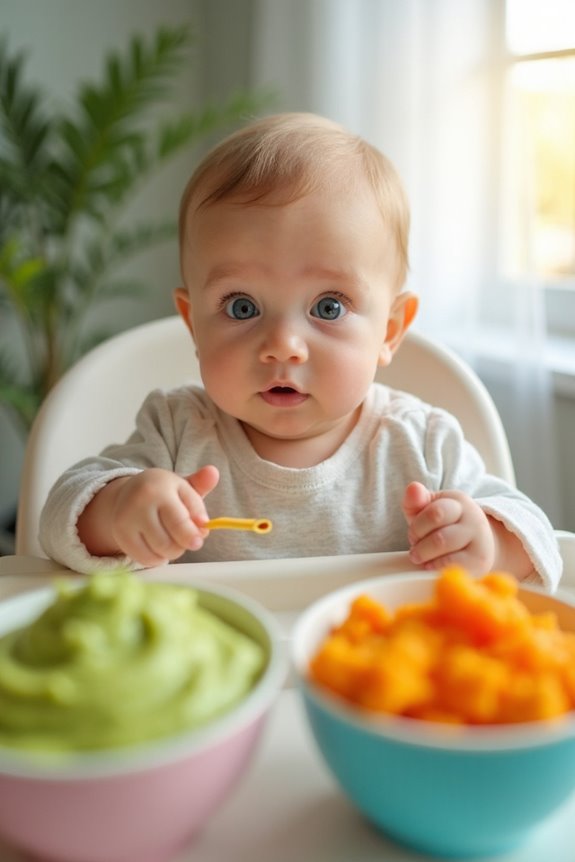
Once we’ve established a mealtime routine, it’s time to focus on maintaining nutritional balance as we introduce solid foods. At this stage, breast milk or formula remains our baby’s primary nutrient source, so let’s gradually supplement with solids.
- Meal Timing: By 8-9 months, we can introduce solids at breakfast, lunch, and dinner, with healthy snacks in between.
- Diverse Foods: Offering a variety of textures and tastes helps ensure nutritional balance, providing essential proteins, vitamins, and minerals.
We should monitor our baby’s growth during this transition, ensuring they’re getting enough iron, calcium, and healthy fats. By fostering a positive eating environment, we can support healthy eating habits that will last a lifetime.
Recommended Products

DELICIOUS BLEND OF APPLE, BLUEBERRY & SPINACH: Each pouch contains 15% recommended daily value of Iron and Zinc, making it easy to squeeze more nutrition into your little one's day.


An Essential Mineral: Our bodies need iron to make hemoglobin, which carries oxygen to all the cells in the body. Our Organic Iron Drops for babies support cellular health*
Frequently Asked Questions
Can Babies Eat Solid Foods While Teething?
Absolutely, our little ones can enjoy solid food options while teething. We just need to watch for teething symptoms and consider softer foods. It’s all about finding what works best for their comfort and enjoyment.
What Are the Signs of Food Allergies in Babies?
Did you know that around 6-8% of children have food allergies? Recognizing symptoms early, like hives or gastrointestinal issues, is crucial. Allergy testing can guide us in ensuring our little ones stay safe and healthy.
How Can I Make Homemade Baby Food Safely?
When we make homemade puree, let’s prioritize baby food safety. We’ll wash ingredients thoroughly, cook them soft, and avoid added sugars. Together, we can create nutritious meals while keeping our little ones safe and healthy!
Is It Necessary to Buy Organic Baby Food?
As we gaze at vibrant jars of organic baby food, we can’t help but feel the peace of knowing its benefits. Choosing organic food options nurtures our little ones while supporting a healthier planet for all of us.
What Common Mistakes Should I Avoid When Starting Solids?
When introducing solids, we should avoid pushing for weight gain and limiting textures. Let’s embrace appropriate textures and introduce allergens gradually, ensuring our little ones develop healthy eating habits while exploring new flavors and experiences together.