As an Amazon Associate, we earn from qualifying purchases. Some links on this site are affiliate links at no extra cost to you. Our recommendations are based on thorough research and editorial judgment.

When Can Babies Learn to Self-Soothe at Bedtime?

Babies can start learning to self-soothe at bedtime around 3 to 4 months, as their circadian rhythms mature, allowing them longer sleep stretches. Initially, infants rely on us for soothing since their self-regulation skills are limited. Placing them to bed awake, engaging in a consistent bedtime routine, and creating a supportive sleep environment helps. By responding consistently and gently, we encourage early self-regulation. Interested in more strategies and insights on this developmental milestone?
Key Takeaways
- Babies typically start developing self-soothing skills between 3 to 4 months of age.
- Circadian rhythms, which aid sleep, develop in infants around four to six months.
- Consistent responses to cries enhance self-regulation and improve self-soothing capabilities.
- Placing babies to bed awake helps them associate the crib with sleep onset.
- A soothing bedtime routine and minimal intervention support self-soothing development.
You may be interested



Recommended Products

Ergonomic for Newborn Growth - Certified as a hip-healthy product by the International Hip Dysplasia Institute (IHDI), the KeaBabies Soothe Baby Swaddle Sack provides ergonomic hip support for an infant's first 6 months of growth.

SAFE SLEEP MADE SIMPLE: Designed to keep your baby cozy and secure without loose blankets, it aligns with the American Academy of Pediatrics’ guidelines for safe sleep. HALO wearable blankets stay in place all night long, preventing your baby from kicking them off and waking up, so everyone enjoys uninterrupted sleep.

SAFE AND SECURE SLEEP SOLUTION: The Original Halo Sleepsack Swaddle replaces loose blankets in the crib, creating a safer sleep environment. Endorsed by hospitals nationwide to promote safe and restful sleep for your baby.
Age and Developmental Milestones
While infants might start showing self-soothing behaviors as early as 3 to 4 months old, it’s important to remember that every baby is unique in their developmental journey. Understanding infant age and developmental stages helps us support their growth.
- Infant Development: At about 1 month, babies self-soothe after roughly 27.6% of awakenings, increasing to 46.4% by 12 months.
- Circadian Rhythms: These develop between four and six months, aiding longer sleep stretches.
- Neonatal Stage: Initially, newborns rely on us for soothing due to limited self-regulation skills.
We can gently guide them by responding consistently to cries, which fosters early self-regulation. As they mature, their ability to self-soothe will improve, enhancing their sleep quality and continuity.
Creating a Supportive Sleep Environment
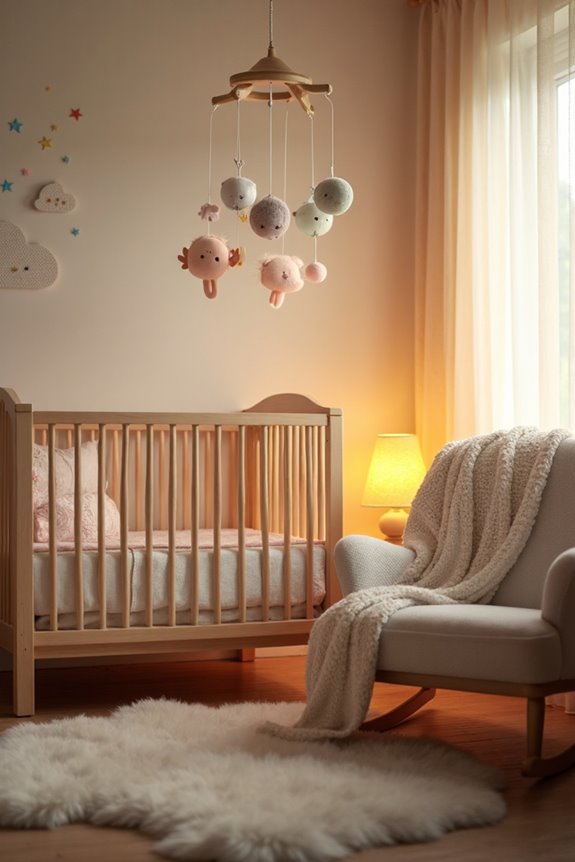
To foster a restful sleep environment for infants, let’s focus on creating spaces that support safe and sound slumber. We can enhance sleep safety by following these guidelines:
- Supine Positioning: Place your baby on their back, lowering SIDS risk.
- Firm Sleep Surface: Use a firm mattress, avoiding suffocation hazards.
- Room Sharing: Share a room, not a bed, to monitor your baby’s safety.
- Avoiding Soft Bedding: Remove soft items that might trap or suffocate.
Environmental factors also play a role:
- Reduced Exposures: Limit smoke and hazards for a healthier space.
- Noise Levels: Maintain a quiet room.
- Light Exposure: Control bedroom light for a sleep-friendly environment.
Recommended Products
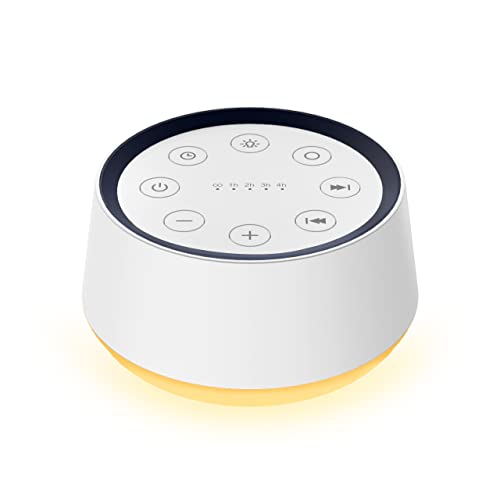
❤[30 Natural and Soothing Sounds] Our white noise machine provides 30 soothing sounds, including 3 Brown noise, 2 White noise(White noise, Pink noise), 2 fan noises( Loud and Soft Fan), 8 lullabies and 15 natural sounds( Rain, Sea waves, Brook, Bird, Train, etc.). This sound machine suitable for relieve stress, relax your mind and create a relaxing sleep environment.
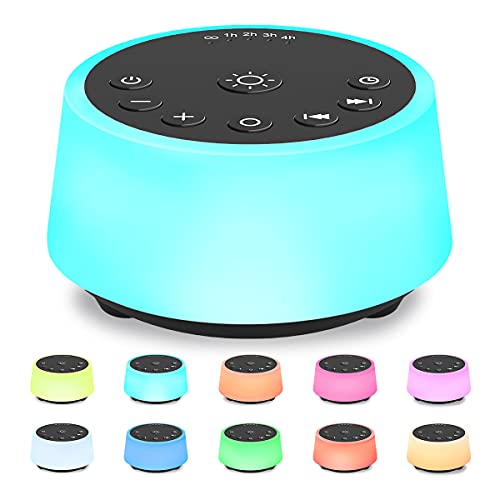
♪【25 High-fidelity and Soothing Sounds】 There are 4 types of white noise, 4 fan sounds, 3 sea wave sounds, 3rain sounds , train, star dust, meditation, and relaxing natural sounds and so on. The sound rhythm helps you fall asleep, and the white noise machine can effectively cover up destructive or startling sounds to protect your sleep quality.

【COMPACT BUT POWERFUL】- D11 Max has more skills. Designed for all things sleep, this sound machine comes with favorable features: rechargeable battery, 21 soothing sounds, customized timers, various volume levels, child-lock for safety, and even memory functions! It is not only a sleep soother sound machine for baby kids, but also an effective white noise machine for adults sleeping & relaxation.
The Role of Parental Influence

Understanding the role of parental influence in an infant’s ability to self-soothe is vital for fostering healthy sleep habits. Our attitudes and emotional support play crucial roles in shaping our babies’ sleep patterns. When we put them to bed drowsy but awake, we’re helping them develop self-soothing skills. Here’s how we can ensure a balanced approach:
- Parental Attitudes: Positive beliefs about sleep training can lead to successful self-soothing strategies. Let’s trust our babies to learn and grow.
- Emotional Support: Consistent gentle reassurance during bedtime routines can lower stress, promoting better sleep.
Research shows that active involvement, like soothing or feeding to sleep, may hinder self-soothing. Instead, we should aim for minimal nighttime intervention, allowing our infants to build autonomy and healthier sleep habits.
Techniques to Encourage Self-Soothing
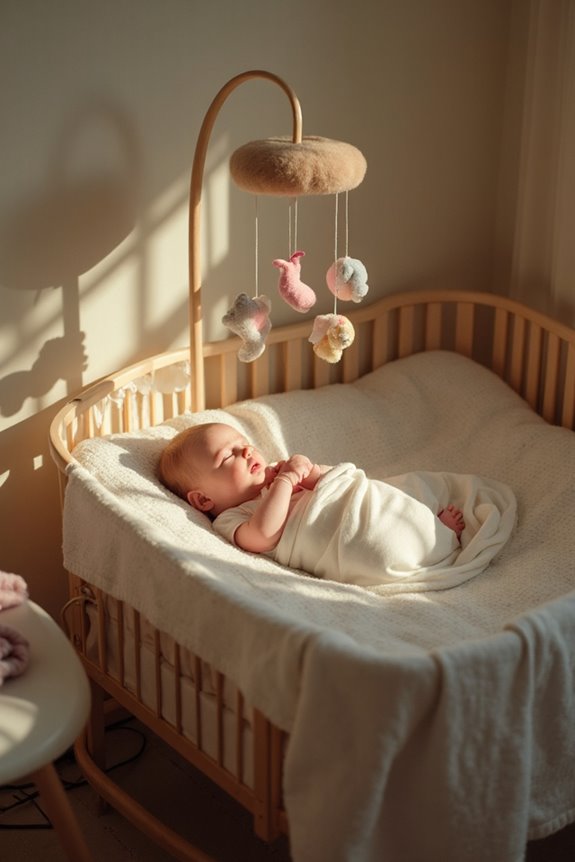
Now that we’ve explored how parental influence can shape our babies’ sleep habits, let’s look at practical techniques to encourage self-soothing. We can start by putting our babies to bed awake, not asleep. This helps them associate the crib with sleep onset and fosters independence. A consistent bedtime routine, with soothing activities like a bath or story, signals it’s time to wind down.
Using fading methods, we gradually reduce our presence at bedtime, employing gentle techniques that minimize distress. These may take time but are kinder alternatives to cry-it-out. Creating a supportive sleep environment—quiet, dark, and comfortable—further aids self-soothing.
Recommended Products

Organic baby Bedtime Drops + Overnight Immunity Support: A natural melatonin free supplement that supports rest & sleep * for infants 4 months+ using natural herbs

CALMING SPRAY FOR BABIES: A great addition to baby’s sleep routine, this Calming Spray is made with lavender and chamomile to help relax and prepare baby for their nap or bedtime, so you can relax too.

Addressing Controversies and Concerns
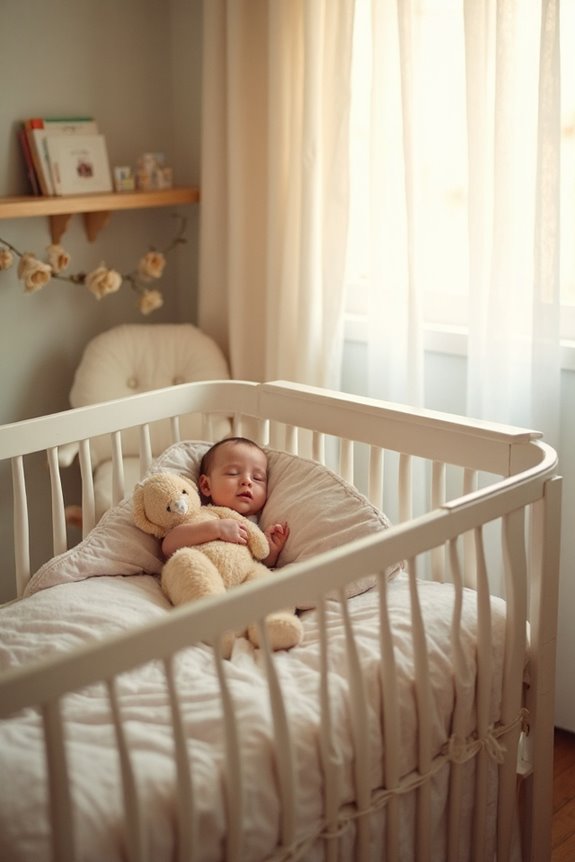
While the concept of self-soothing in infants might seem straightforward, it actually stirs quite a bit of debate, raising some genuine concerns among parents and experts alike. We’ve all heard self-soothing myths, suggesting that encouraging this skill might neglect our little ones or spike their stress levels. Some studies observe increased cortisol in babies, indicating stress when pushed to self-soothe prematurely.
- Parental Expectations: The pressure for a self-soothing baby can dent our confidence and emotional well-being.
- Emotional Implications: Misleading labels like “difficulty self-soothing” as an emotional risk can cause unnecessary worry.
- Research Gaps: Limited objective data leaves many questions about when infants can naturally self-soothe.
Navigating these concerns together, we can better understand our babies’ needs, promoting a balanced approach to their development.
Long-Term Benefits of Self-Soothing
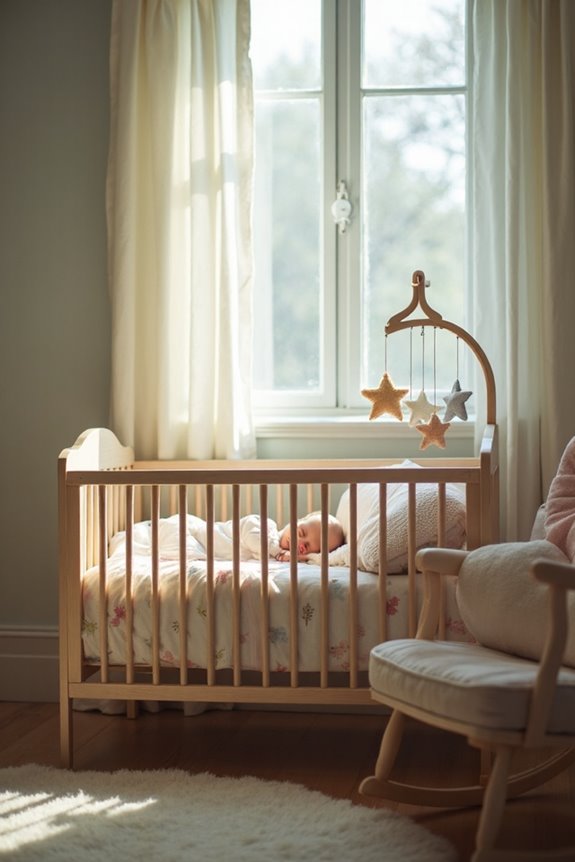
As we dive into the long-term benefits of self-soothing, it’s important to recognize how this skill can positively impact both babies and parents. We find that establishing predictable patterns through self-soothing enhances sleep quality and duration. This means fewer nighttime awakenings and a more consistent routine, giving us peace of mind.
- Predictable Patterns: Babies who self-soothe enjoy stable sleep schedules, easing our nightly duties.
- Emotional Regulation: These skills foster better emotional stability, reducing stress and inexplicable fussiness.
- Developmental Gains: Self-soothing is linked to improved neurological and cognitive development, aiding our child’s growth.
- Parental Benefits: Reduced stress and anxiety, coupled with increased confidence, strengthen our bond with our little ones, leading to a healthier family dynamic.
Frequently Asked Questions
Recommended Products

𝗛𝗲𝗹𝗽 𝗞𝗶𝗱𝘀 𝗦𝗹𝗲𝗲𝗽 𝗕𝗲𝘁𝘁𝗲𝗿: Dreamegg sound machine baby offers 34 soothing sounds, including 11 nature sounds, 7 ambient sounds, 6 white noise sounds, and 10 melodies. The diverse range of sounds and immersive experience can quickly settle the children down, speeding up their transition to sleep. Say goodbye to the hassle of restless babies before bedtime or at nursery time!

OK TO WAKE CLOCK - Do you have a problem with your child getting up way too early in the morning? the okay to wake clock is a game changer which uses colors (green light red light) to teach your kids understanding the concept of when to stay in bed and when to get up.

SOUND MACHINE: Nursery essential with timer/auto shut-off (15, 30, 60 mins) and 7 sleepy sounds - white noise, pink noise, heartbeat, lullaby, bird, waves, and wind.
How Does Self-Soothing Affect Sibling Relationships?
In the dance of sibling bonding, self-soothing acts like a gentle melody, weaving shared routines into our lives. It reduces conflict, fosters emotional regulation, and strengthens our support for each other, creating a harmonious family symphony.
Can Self-Soothing Impact Breastfeeding Schedules?
We know self-soothing can impact breastfeeding habits by altering sleep patterns, which might disrupt feeding schedules. Let’s find a balance, ensuring our babies’ needs are met while supporting our breastfeeding journey. We’re in this together.
What Is the Role of Diet in Self-Soothing Development?
Imagine diet as a gentle cradle, rocking us into self-soothing. Our diet impacts emotional development, while nutrition timing shapes sleep patterns. Let’s nurture those tender moments by aligning feeding with our baby’s natural rhythms.
Are There Genetic Factors Influencing Self-Soothing Abilities?
We know genetic predisposition plays a big role in self-soothing abilities. Let’s remember that temperament differences, often influenced by genetics, shape how readily an infant can learn these skills. Embracing these differences can guide our approaches.
How Do Sleep Regressions Affect Self-Soothing Progress?
Ever watched your baby struggle during a sleep regression? It challenges sleep training and disrupts emotional regulation. Let’s nurture their progress with consistency and love, ensuring they find their way back to peaceful sleep. We’re in this together.