As an Amazon Associate, we earn from qualifying purchases. Some links on this site are affiliate links at no extra cost to you. Our recommendations are based on thorough research and editorial judgment.
When Do Babies Start Talking? A Developmental Guide

From the moment babies enter the world, they start communicating. Here’s a quick timeline:
- 0-3 Months: They use cries to express needs and may recognize familiar voices.
- 4-6 Months: Expect cooing and sound imitation as they engage with their surroundings.
- 7-11 Months: Look out for babbling, where they practice sounds and gestures.
- 12-17 Months: First words appear, marking the beginning of expressive language.
- 18 Months-5 Years: Vocabulary grows rapidly, leading to simple sentences and questions.
You may be interested



If you’re curious about each stage of this fascinating journey, keep exploring!
Key Takeaways
- Babies typically start vocalizing through crying within the first months, expressing needs like hunger and discomfort.
- Around four to six months, babies begin to imitate sounds, enhancing their emotional expression and social engagement.
- The babbling stage occurs between seven to eleven months, featuring repeated consonant-vowel sounds and gestures, crucial for communication skill development.
- First words often emerge between twelve to seventeen months, usually consisting of simple labels for familiar objects or people.
- Vocabulary expands significantly from eighteen months to five years, with children forming sentences and asking complex questions by age four or five.
Early Vocalizations: The First Three Months
When we think about the early stages of communication in babies, it’s fascinating to realize that their vocal journey begins almost immediately after birth. In these first three months, crying patterns become their primary means of expressing needs, whether it’s hunger, discomfort, or tiredness. Each cry holds a unique tone that signals what they want.
We also notice how babies respond to caregiver interaction. They recognize familiar voices, often calming when they hear their parents speak. This connection forms the foundation for future communication. As they reach the end of three months, cooing may emerge, introducing a playful aspect to their sounds. Understanding these early vocalizations helps us bond and respond effectively, fostering a nurturing environment for their development.
Recommended Products
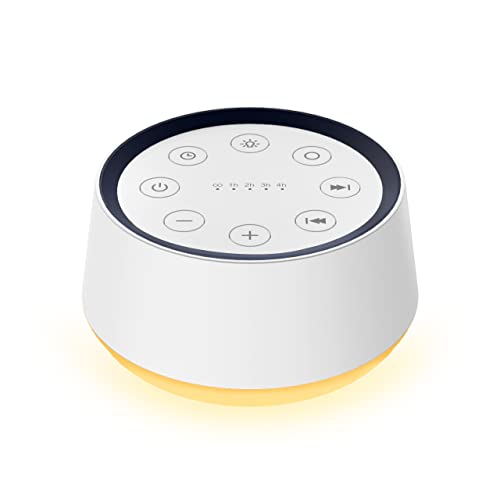
❤[30 Natural and Soothing Sounds] Our white noise machine provides 30 soothing sounds, including 3 Brown noise, 2 White noise(White noise, Pink noise), 2 fan noises( Loud and Soft Fan), 8 lullabies and 15 natural sounds( Rain, Sea waves, Brook, Bird, Train, etc.). This sound machine suitable for relieve stress, relax your mind and create a relaxing sleep environment.

【COMPACT BUT POWERFUL】- D11 Max has more skills. Designed for all things sleep, this sound machine comes with favorable features: rechargeable battery, 21 soothing sounds, customized timers, various volume levels, child-lock for safety, and even memory functions! It is not only a sleep soother sound machine for baby kids, but also an effective white noise machine for adults sleeping & relaxation.
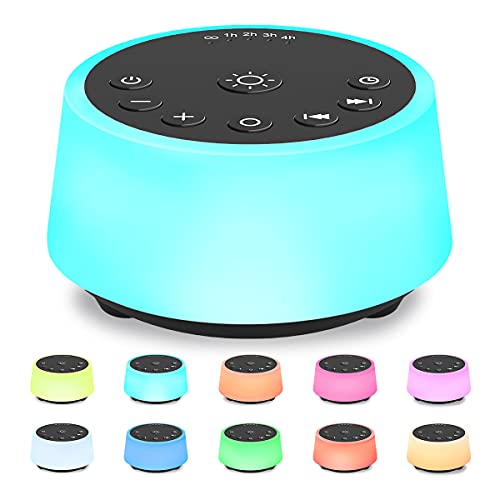
♪【25 High-fidelity and Soothing Sounds】 There are 4 types of white noise, 4 fan sounds, 3 sea wave sounds, 3rain sounds , train, star dust, meditation, and relaxing natural sounds and so on. The sound rhythm helps you fall asleep, and the white noise machine can effectively cover up destructive or startling sounds to protect your sleep quality.
Exploring Sounds: From Four to Six Months
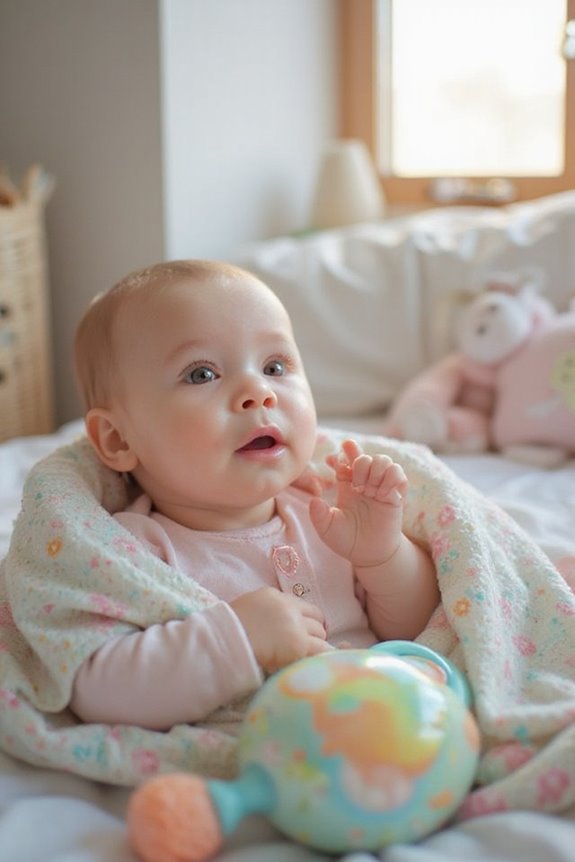
As babies wrap up their third month, we start to notice a delightful shift in their communication style. From four to six months, they engage in sound imitation, mimicking the sounds they hear around them. This playful exploration is essential for their language development.
- Cooing and Gurgling: These sounds are common, serving as a precursor to more complex vocalizations.
- Emotional Expression: Babies use varied sounds to express their feelings and needs.
- Social Interaction: They’ll use sounds to capture our attention and engage with us.
Encouraging this development is vital. Responding to their babbles and playing imitation games can enhance their learning. By surrounding them with diverse sounds, we help them grow into confident communicators.
Recommended Products

The Baby Einstein Take Along Tunes inspires a lifelong love of music with hours of entertainment; volume control is music to mom and dad's ears

From Viral TikTok Trend to #1 Best Seller: With over 100 million views on TikTok and counting, this viral sensation has delighted over 3 million babies. Brought to you by creators of Baby Einstein, featuring US-based design and development and meeting the highest industry safety standards

The Babbling Stage: Seven to Eleven Months
During the months of seven to eleven, babies embark on an exciting journey known as the babbling stage, where they start to experiment with sounds in ways that lay the groundwork for future speech.
- Canonical Babbling: Babies produce repeated consonant-vowel blends like “ba-ba-ba” and “ma-ma-ma,” moving beyond cooing.
- Sound Imitation: They mimic heard sounds more intentionally, practicing with “mumbled” expressions and matching adult tones.
- Gestures: Babbling combines with gestures, like shaking their head for “no,” enhancing communication.
Recommended Products

2 mini flexible, teethable Oballs are easy to hold

Shake up playtime with the Oball Rattle by Bright Starts; rattle-version of the beloved Oball featuring an easy-grasp design loved for over 25 years

First Words and Simple Phrases: Twelve to Seventeen Months
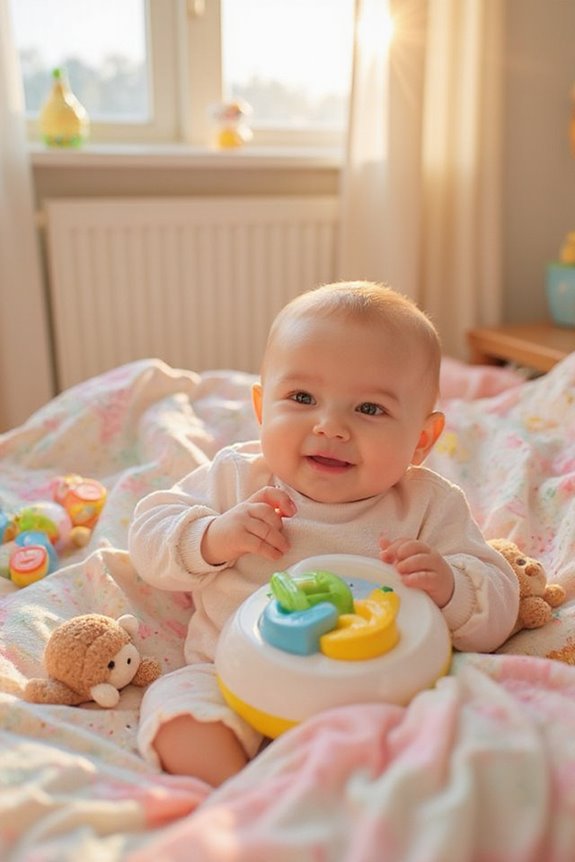
At around twelve to seventeen months, most babies begin to share their first words and simple phrases, marking a significant milestone in their language development. During this time, we can expect a few exciting changes in our little ones’ communication skills:
- First Words: Babies typically start with 2 to 3 words, often labeling familiar people or objects.
- Simple Phrases: They may try to imitate phrases, showing early language comprehension.
- Vocabulary Development: Expect their vocabulary to grow to 4 to 6 words by the end of this stage.
- Understanding Commands: Our babies can follow simple one-step commands, especially when accompanied by gestures.
These skills lay a solid foundation for their future language journey, so let’s encourage their playful interactions and reading interest!
Recommended Products
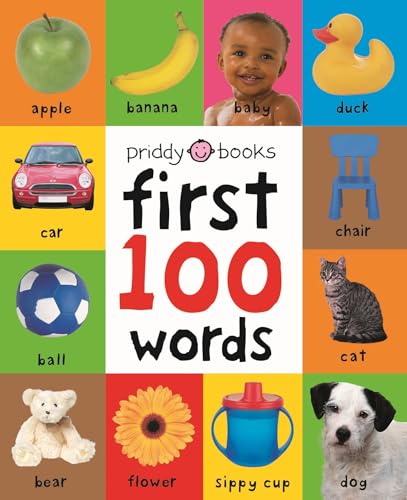
A good option for a Book Lover

Vocabulary Growth and Sentence Formation: Eighteen Months to Five Years
After reaching those exciting milestones of first words and simple phrases, our little ones embark on an incredible journey of vocabulary growth and sentence formation between eighteen months and five years. During this time, we witness remarkable vocabulary milestones, as they expand from 10 to over 2,000 words!
- 18–24 Months: They start using simple phrases like “more milk” and ask one- to two-word questions.
- 24–30 Months: Two-word sentences appear, and their clarity improves.
- 3–4 Years: Sentences lengthen, and they tell simple stories.
- 4–5 Years: They ask complex questions and use correct grammar most of the time.
As we support their learning, we nurture their growing sentence complexity and understanding of the world around them.
Recommended Products

SC-714844


3-IN-1 SPEECH THERAPY CARDS FOR AGES 3+ – Make speech practice more fun with these toddler flash cards that help kids work on articulation, prepositions, and describing everyday things.
Frequently Asked Questions
What Can I Do to Encourage My Baby’s Speech Development?
Did you know that babies hear about 30,000 words a day? To encourage our baby’s speech development, let’s engage in playful interactions and read together regularly, fostering a loving environment that nurtures their language growth.
How Do Hearing Issues Affect a Baby’s Talking Milestones?
Hearing impairment can really affect our baby’s talking milestones. We should explore communication strategies together, ensuring early intervention supports their development. With the right tools, we can help our little ones thrive in their speech journey.
When Should I Be Concerned About My Baby’s Speech Delays?
When we’re worried about our baby’s speech delays, we should pay attention to developmental milestones. If they’re not meeting them, seeking speech therapy can be a loving step to support their growth together.
Are There Any Signs of Advanced Speech Development in Babies?
Did you know that babies with larger vocabularies often show advanced babbling and early comprehension? If we notice our little ones imitating sounds and gestures, it’s a delightful sign of their developing communication skills.
How Does Bilingualism Impact a Baby’s Language Acquisition?
Bilingualism enriches our babies’ language acquisition, offering bilingual advantages like enhanced cognitive skills. We may notice them engaging in language mixing, effortlessly switching between languages, showcasing their impressive adaptability and unique communication gifts.
References
https://www.nidcd.nih.gov/health/speech-and-language
https://www.chop.edu/health-resources/age-appropriate-speech-and-language-milestones
https://www.babycenter.com/baby/baby-development/your-childs-talking-timeline_10356902
https://childdevelopment.com.au/resources/child-development-charts/stages-of-language-development-chart/
https://raisingchildren.net.au/babies/development/language-development/language-3-12-months
https://www.gosh.nhs.uk/conditions-and-treatments/procedures-and-treatments/speech-and-language-development-birth-12-months/
https://www.mayoclinic.org/healthy-lifestyle/infant-and-toddler-health/in-depth/language-development/art-20045163
https://www.healthline.com/health/baby/language-milestones-0-to-12-months
https://choc.org/ages-stages/1-to-3-months/
https://www.speechandlanguagekids.com/what-speech-and-language-skills-should-my-6-month-old-have/