As an Amazon Associate, we earn from qualifying purchases. Some links on this site are affiliate links at no extra cost to you. Our recommendations are based on thorough research and editorial judgment.

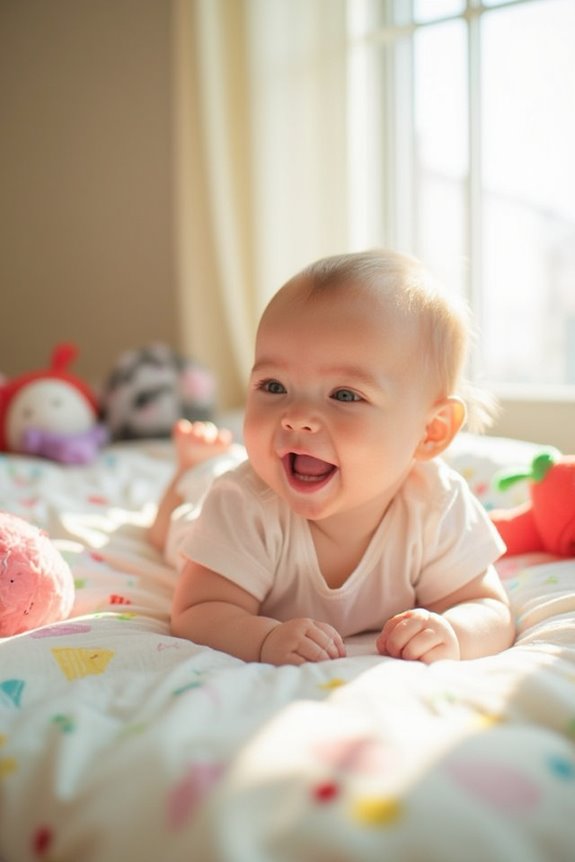
When Do Babies Start Laughing? A Developmental Milestone

Babies typically start laughing between 3 to 4 months, which is an exciting milestone in their development. At this age, they develop social connections through laughter, engaging more actively with caregivers. As they explore their environment, playful interactions, like peek-a-boo, can trigger giggles. Remember, every baby is unique, so variations exist in when they laugh. We can discover more about supporting their laughter journey and its impact on their growth together.
Key Takeaways
- Babies typically start laughing between 3 to 4 months of age during social interactions.
- Laughter develops alongside physical milestones like rolling over and sitting up.
- Engaging activities, such as peek-a-boo, often trigger laughter in infants.
- Laughter fosters emotional connections and enhances cognitive and social development.
- Individual variability exists; some babies may laugh earlier or later than the typical range.
Understanding the Age of Laughter
You may be interested



When it comes to understanding the age of laughter in babies, it’s fascinating to see how this joyful expression develops. Typically, we notice that babies begin smiling around 6 to 8 weeks, paving the way for that delightful infant laughter we all cherish. By 3 to 4 months, many babies experience their first true laughter, a blend of vocalization and a social smile.
Here are some key points about this developmental milestone:
- Laughter often arises from social interactions, not just humor.
- By 6 months, we see laughter become more pronounced, often responding to playful stimuli like tickling.
Engaging in these joyful moments not only fosters bonding but also brings numerous laughter benefits, enhancing our baby’s emotional expression and social skills.
Recommended Products

2 mini flexible, teethable Oballs are easy to hold


FOR NEWBORNS: Presented in a charming Noah's ark-themed box, it's an ideal choice for boy and girl’s dedications, or christenings. Suitable for infants aged 0 to 12 months, this set includes selected items that are essential for the early stages of a baby's life. From adorable clothing pieces to cuddly toys and soothing accessories, this gift set is sure to bring joy and comfort to the precious little one. Celebrate the arrival of a newborn with this thoughtful and beautifully wrapped gift set.
Key Developmental Milestones
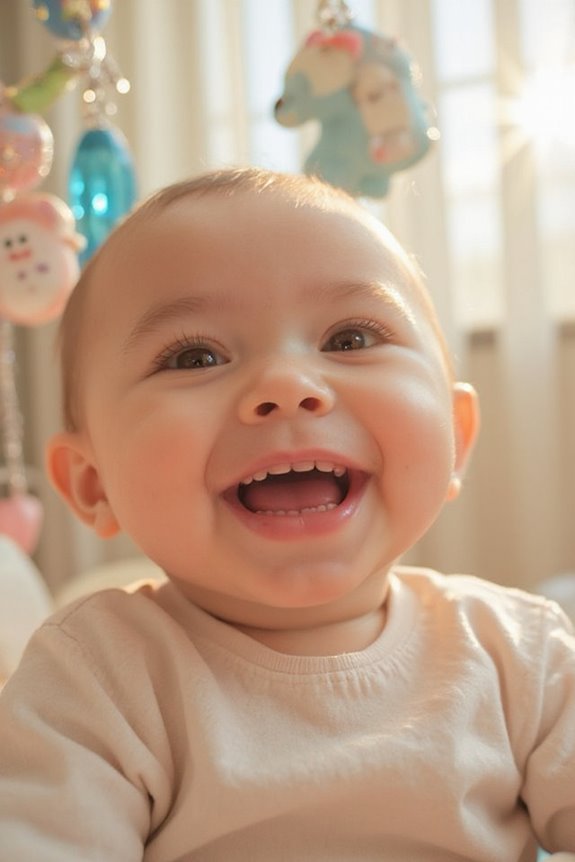
As babies grow and develop, they’re reaching exciting milestones that shape their physical, cognitive, sensory, and social abilities. These key milestones not only enhance their skills but also pave the way for joyful moments, like laughter.
- Physical Development: By 5-6 months, babies roll over and sit up, gaining independence.
- Cognitive Development: Around 7 months, they start babbling and understanding familiar words, enriching their communication.
- Social Interactions: By 6 months, they recognize faces and respond emotionally, deepening connections.
- Emotional Responses: At 7 months, babies react to others’ emotions, indicating their growing empathy.
These milestones are essential, helping our little ones navigate their world and engage with us in delightful ways, fostering laughter along the journey.
Recommended Products


Shake up playtime with the Oball Rattle by Bright Starts; rattle-version of the beloved Oball featuring an easy-grasp design loved for over 25 years

INCLUDED EVERYTHING BABY WOULD ACTUALLY LOVE - This toy set includes a soft tissue box, 3 different textured & crinkle tissues, and 12 silk scarves. It offers a variety of engaging elements that is an ideal choice for babies over 6 months old. From stimulating fine motor skills to encouraging exploration and early education, this set offers a range of experiences that will captivate and entertain your little one while supporting their development
Common Triggers for Laughter
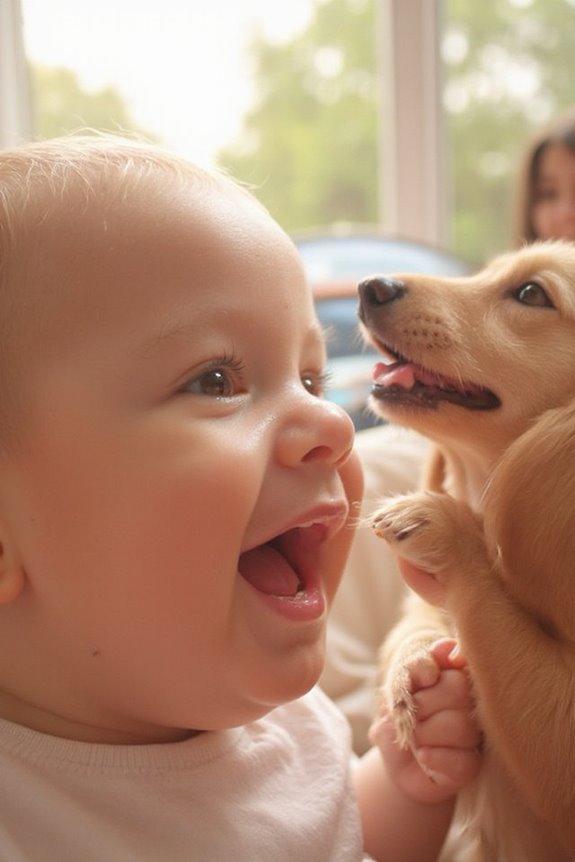
Laughter in babies often emerges from a variety of common triggers that engage their senses and emotions. We’ve all seen how parental engagement, like playful teasing or games, can spark that delightful giggle.
Some common triggers include:
- Playful Interactions: Games like peek-a-boo create joyful moments.
- Social Interactions: Familiar faces and routines often elicit laughter.
- Environmental Exploration: New sights and sounds can provoke giggles.
- Gentle Touch and Tickling: Babies respond joyfully to light touches.
These playful moments not only entertain but also deepen connections between us and our little ones. Encouraging laughter through these triggers can foster a loving, joyful atmosphere, enriching both their experience and ours as caregivers.
Recommended Products

PEEK-A-BOO FLAPPY PLUSH: Flappy the Elephant is here in a fun, floppy 7” new format Simply press his soft tummy with a gentle squeeze - his ears flop down, covering his eyes to hide in a battey-free game of peek-a-boo that you customize with baby

PEEK-A-BOO TEDDY BEAR: The 11.5" Peek-a-Boo bear recites one of six different phrases while animated mouth and arm movements recreate a fun peek-a-boo game with baby Features a satin-accented blanket for additional tactile sensation
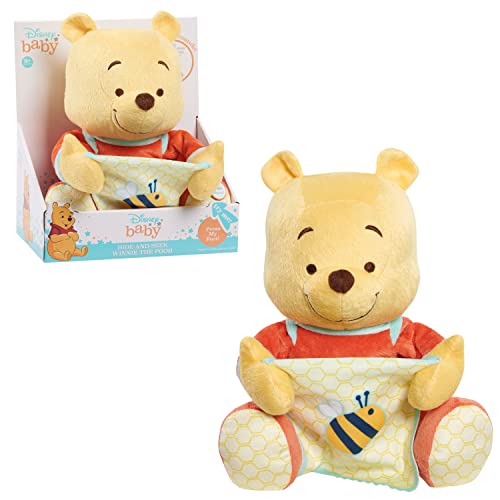
Includes: Winnie the Pooh feature plush toy.
The Importance of Laughter in Development
While it might seem simple, the act of laughing carries profound importance in a child’s development. We know laughter isn’t just enjoyable; it plays a vital role in shaping cognitive flexibility, which is essential for problem-solving and adapting to new situations. Here’s why laughter matters:
- Cognitive Development: It enhances creativity and helps improve vocabulary.
- Emotional Intelligence: Laughter teaches children to manage stress, express emotions, and develop resilience.
- Social Skills: Shared laughter strengthens relationships and promotes cooperation among peers.
- Health Benefits: It boosts the immune system, reduces anxiety, and can even aid in pain management.
Variability in Laughter Development

Understanding when babies start laughing can be fascinating, especially since there’s such a wide range of variability in their development. Most babies begin to laugh between 3 to 4 months, but some might giggle earlier or later, reflecting their individual developmental differences.
- Early Smiles: Infants often smile as early as their first month, setting the stage for laughter.
- Social Interaction: Laughter typically arises from engaging social interactions, like playful sounds from caregivers.
- Cognitive Growth: As babies develop, their understanding of humor evolves, influencing when they laugh.
This laughter variability is normal and highlights how each child’s journey is unique. By observing these milestones, we can appreciate the joyful moments our little ones share with us as they grow.
Recommended Products

THE PLAYBOOK FOR FIRST TIME PARENTS: After you bring your baby home from the hospital, there's no instruction manual that comes with (surprise!). We'll help you figure out what to do all day long and how to spend quality time together as your baby grows. Starting from birth and all the way until your baby's first birthday.

Bright Starts Oball is a fan-favorite toy ball that has been engaging tiny fingers for over 25 years; flexible design features large finger holes to help baby easily grip and explore

EDUCATIONAL TOY: Plush pterodactyl, dinosaur themed backpack makes a great toy for boys and girls. Breezy the Pterodactyl Backpack connects education with fun to develop brain power, fine motor skills, hand-eye coordination & problem-solving skills.
Supporting Your Baby’s Laughter
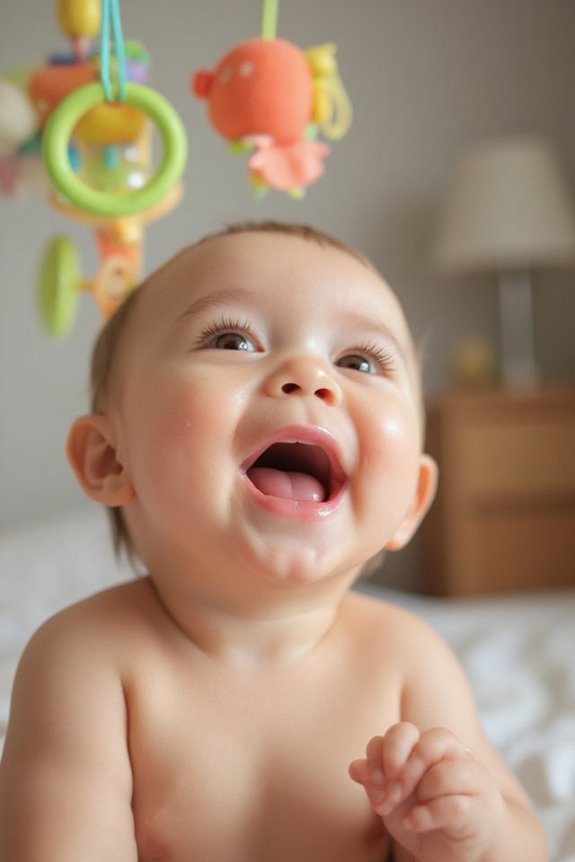
When we think about supporting our baby’s laughter, it’s important to realize that simple interactions can have a profound impact on their emotional development. Engaging in playful interactions, like making silly faces or playing peek-a-boo, not only brings joy but also strengthens our bond with them.
Here are some ways to encourage laughter:
- Sensory Activities: Explore textures or sounds together, as these novel experiences can spark giggles.
- Physical Stimulation: Tickling or gentle bouncing often elicits laughter, showing them that play can be fun.
- Vocal Play: Use different tones and playful sounds to keep their attention and encourage mimicking.
Recommended Products
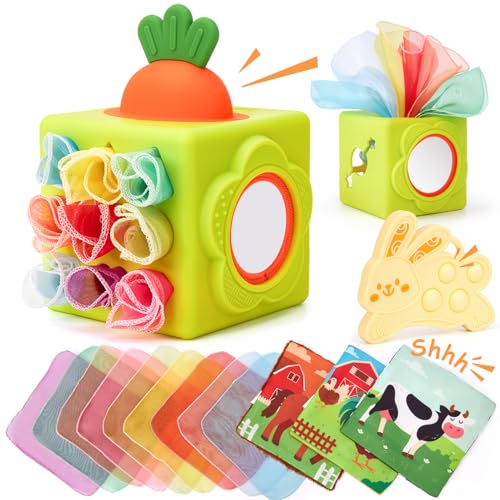
Soft Yet Sturdy Silicone – Real Tissue Box Fun Without the Mess: Made from premium, baby-safe silicone, it is soft to the touch yet firm enough to hold its shape, just like a real tissue box. Heavier than flimsy fabric versions, it ensures smooth, satisfying pulls every time. A fun, mess-free way to keep curious little ones entertained

Promote your baby's sensory development: The soft, comfortable baby tummy time water mat is the perfect sensory toy for developing solid head, neck and shoulder muscles as well as refining the hand-eye coordination, fine motor and social skills. The bright, colourful sea animals and eye-catching illustrations will keep your baby playing for hours.

Classic Baby Toys: Bundle including 1 stacking ring toy and 1 set of baby blocks
Frequently Asked Questions
Can Laughter Indicate a Developmental Delay in Babies?
We understand how vital laughter development is in showing emotional expression. If our little one isn’t laughing by 6-7 months, it might suggest a delay. Let’s stay attentive and consult a pediatrician if we’re concerned.
How Can I Tell if My Baby Is Laughing or Just Making Sounds?
Did you know that 70% of early laughter comes from social interactions? We can tell if our baby’s laughing by observing those joyful expressions and recognizing laughter triggers, distinguishing it from mere sounds. It’s magical!
Are There Cultural Differences in When Babies Start Laughing?
We’ve noticed that cultural influences shape laughter traditions, affecting when babies giggle for the first time. Each family’s unique play styles and interactions create delightful moments, highlighting the joy of shared laughter across cultures.
What Should I Do if My Baby Doesn’T Laugh by 6 Months?
If our baby’s laughter hasn’t erupted by six months, it can feel like waiting for a unicorn! Let’s seek developmental support, engage in playful activities, and consult a pediatrician to ensure everything’s on track.
Do Certain Parenting Styles Influence a Baby’S Laughter Development?
Absolutely, our parenting styles deeply influence our baby’s laughter development. By nurturing emotional connections through playful interactions, we create a joyful environment that encourages giggles and strengthens our bond, making laughter a beautiful part of our journey together.
References
https://www.parents.com/baby/development/laughing/babys-early-laughs/
https://www.pampers.com/en-us/baby/development/article/when-do-babies-start-laughing
https://blog.lovevery.com/skills-stages/laughing/
https://www.aexplorers.com/when-do-infants-start-to-laugh/
https://www.annabella-pump.com/blogs/blog/make-em-laugh-when-does-a-baby-start-laughing
https://www.webmd.com/parenting/baby/features/stages-of-development
https://www.cdc.gov/ncbddd/actearly/milestones/index.html
https://my.clevelandclinic.org/health/articles/22063-baby-development-milestones-safety
https://www.marchofdimes.org/find-support/topics/parenthood/developmental-milestones-baby
https://www.michigan.gov/mikidsmatter/parents/infant/milestones