As an Amazon Associate, we earn from qualifying purchases. Some links on this site are affiliate links at no extra cost to you. Our recommendations are based on thorough research and editorial judgment.

How to Sterilize Baby Bottles: A Guide for New Parents

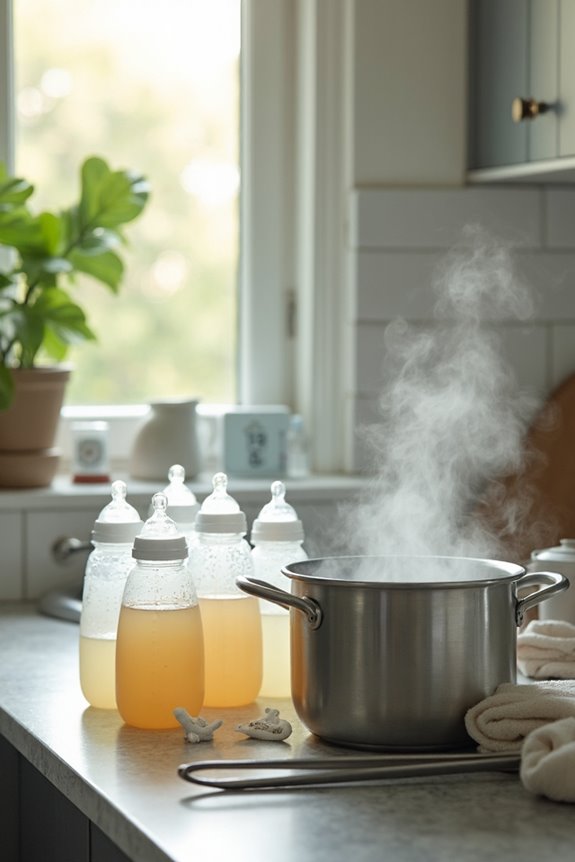
Here’s how we can guide you to sterilize baby bottles effectively. We ensure safety by starting with clean bottles, then choose a method suited to your lifestyle. Boiling works well for a cost-friendly approach, while electric steam sterilizers offer convenience. Cold water sterilization is an eco-friendly option. Remember, consistently sterilizing reduces infection risk for your baby. Let’s dive into safety tips and environmental impacts, helping you select the best method for your family’s needs.
Key Takeaways
- Boil bottles in water for 5-10 minutes to effectively kill bacteria and viruses.
- Use electric steam sterilizers for quick and convenient bottle sterilization with minimal effort.
- Sterilize using cold water and chemical tablets for an eco-friendly, energy-saving option.
- Microwave sterilizer bags offer portability and fast sterilization in just a few minutes.
- Always wash bottles with mild detergent before sterilizing to ensure complete hygiene.
Benefits of Sterilizing Baby Bottles
You may be interested



Sterilizing baby bottles is a crucial step in ensuring our little ones have a safe and healthy feeding experience. We know how important it is to guard their fragile immune systems from harmful pathogens that lurk in unsterilized bottles. Let’s delve into the health benefits and hygiene practices of sterilization:
- Health Benefits: By sterilizing, we eliminate bacteria and viruses, reducing our baby’s risk of infections. This practice offers long-term health benefits by minimizing exposure to harmful germs, especially vital for newborns and preemies.
- Hygiene Practices: Including sterilization in our routine ensures consistent hygiene standards. This isn’t just about cleanliness; it’s about peace of mind. Sterilization enhances confidence that we’re providing a safe, germ-free environment for feeding our cherished little ones.
Recommended Products

Smarter Design, Not Smaller Capacity: Stop Choosing Between Capacity and Counter Space. We reimagined the interior to be 20% more space-efficient than other bulky old models. Grownsy SteriDry Pro compact sterilizer dryer fits all your daily bottles and feeding supplies accessories—and works 30% faster—letting you save more precious moments with your little one instead of waiting around.


𝐔𝐋𝐓𝐈𝐌𝐀𝐓𝐄 𝐓𝐈𝐌𝐄-𝐒𝐀𝐕𝐈𝐍𝐆 & 𝐂𝐋𝐄𝐀𝐍𝐈𝐍𝐆 𝐒𝐎𝐋𝐔𝐓𝐈𝐎𝐍: Automatically washes, sterilizes, and dries baby bottles, pump parts, baby tableware, and more, saving you precious time to spend with your family.
Popular Sterilization Methods
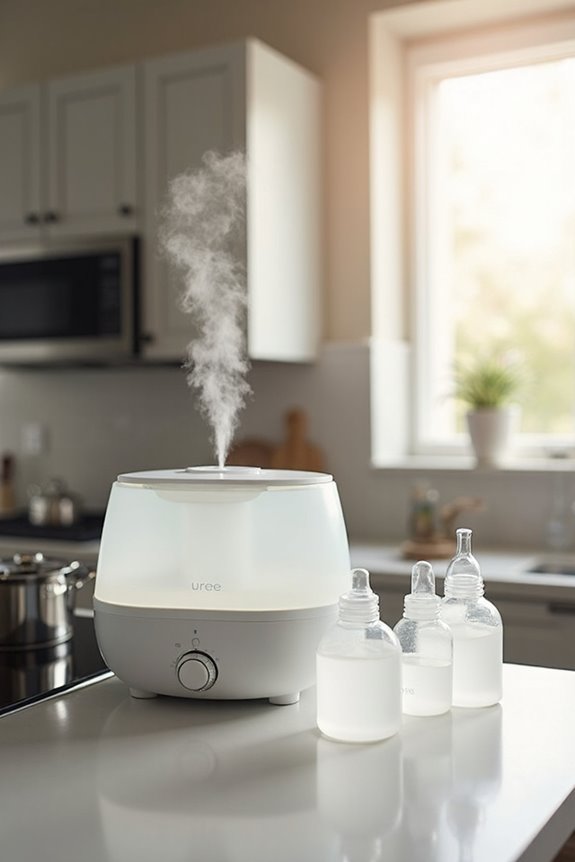
When it comes to keeping our baby’s bottles germ-free, there are several popular methods we can rely on, each with its own set of advantages and considerations. Let’s explore these sterilization techniques to ensure bottle safety:
- Boiling Method: Submerge bottles in boiling water. It’s cost-effective but watch out for high energy use and scalding risks.
- Electric Steam Sterilizers: These are efficient, with models like Philips Avent offering convenience despite higher costs.
- Cold Water Sterilization: Use chemical tablets in a container, like the Milton Steriliser Bucket—eco-friendly and less energy-intensive.
- Microwave Sterilizer Bags: Quick and travel-friendly but might damage bottle parts over time.
- Bleach Solution: Involves mixing bleach with water—affordable but requires careful handling to avoid toxicity.
Recommended Products

BABY BOTTLE STERILIZER AND DRYER. Sterilize up to six Narrow or Wide-Neck baby bottles at once, plus bottle accessories, breast pump parts, pacifiers, teethers, and more.

MICROWAVE STEAM STERILIZER. Steam heat quickly sterilizes baby bottles, nipples, bottle parts, and more.

99.999% High-Efficiency Deep Sterilization: Choose the 6-minute quick sterilization cycle to eliminate 99.9% of common bacteria, or switch to Auto Mode (set for 60 minutes) for deep sterilization that kills up to 99.999% of bacteria. No boiling water or microwave heating needed—keep your baby’s feeding essentials safe, hygienic, and always ready to use
Environmental Impact of Sterilization Methods
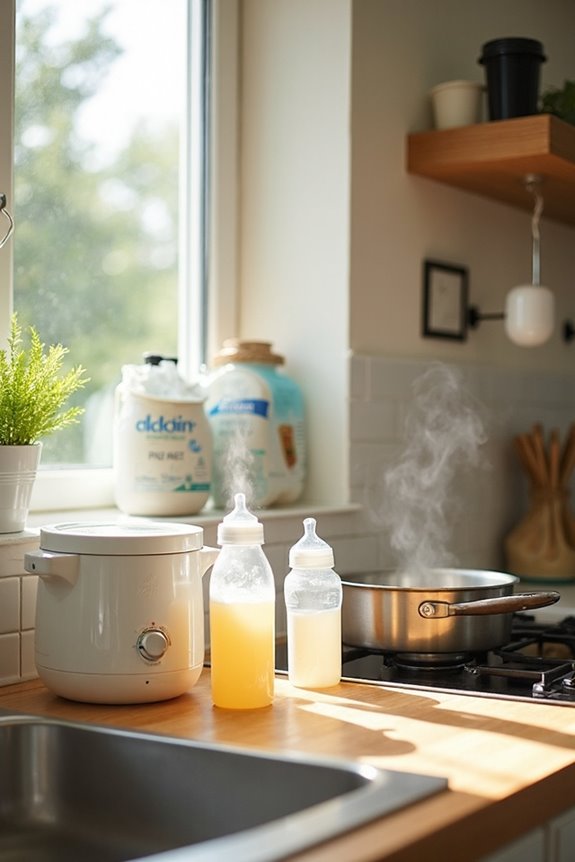
As we strive to keep our baby bottles germ-free, it’s important to consider the environmental impact of our chosen sterilization methods. Embracing sustainable practices can make a difference. For instance, steam sterilizers, though effective, consume substantial energy, especially if not powered by renewable sources. Similarly, boiling water frequently increases our water consumption. Using eco-friendly solutions, like biodegradable agents, can help minimize chemical contamination.
Let’s be mindful of plastic degradation too. UV sterilizers might weaken bottle materials, affecting durability, while steam disinfection could release microplastics from silicone components. Opt for BPA-free materials to lessen environmental concerns. By choosing energy-efficient options and encouraging community awareness, we can collectively adopt more sustainable habits, nurturing both our babies and the planet.
Safety Tips for Sterilizing Bottles
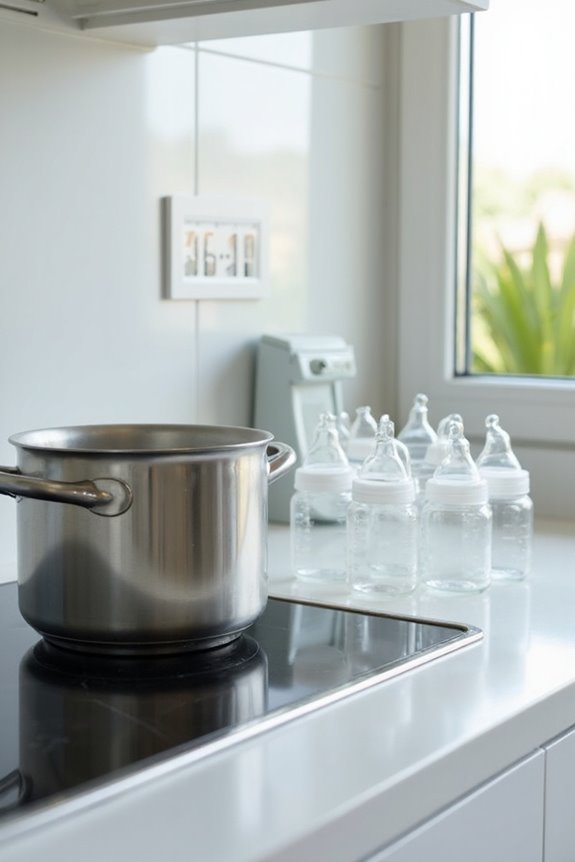
Have you ever wondered how to keep baby bottles safe and clean for your little one? Let’s dive into essential safety tips, starting with sterilization frequency. We should follow manufacturer instructions to ensure effectiveness, replacing sterilizing solutions every 24 hours.
When using chemical sterilization, handle chemicals with care, keeping them out of children’s reach. Always follow instructions for antibacterial solutions and dispose of them properly. If needed, rinse thoroughly to avoid residue.
For microwave sterilization, use microwave-safe equipment, checking for damage afterward. Remember, never heat milk in the microwave.
In the dishwasher, only use bottles labeled as dishwasher-safe with mild detergent. Place small parts securely to prevent loss.
Lastly, maintain general hygiene by washing and air-drying bottles immediately after use. Regular inspections for wear keep us prepared.
Recommended Products

Kindly note: This is a sterilizer and dryer for baby essentials, it does not include a washing function. This product is only suitable for US standard rated voltage 120V.

【All-in-One Sterilizer & Dryer — Not a Washer】 This is a sterilizer and dryer for baby essentials (hand wash required). It combines 5 functions: Auto Steam Sterilization, Dry, Store, Sterilize-Only, and Preset. Our bottle sterilizer and dryer delivers safety without the detergent residues common in combo washer-sterilizers. Its simple front-panel control means no bending, offering pure, reliable convenience for busy parents. A thoughtful baby shower gift for the modern nursery.

【99.9% Germ-Free Steam Sterilization】Our baby bottle sterilizer uses powerful 212°F steam to eliminate 99.9% of bacteria and viruses, ensuring bottles, pacifiers, and pump parts are safe and hygienic. The automatic sterilize-and-dry cycle completes in just 50 minutes, perfect for busy parents prioritizing their baby’s health and safety
Cost Considerations for Sterilization Equipment
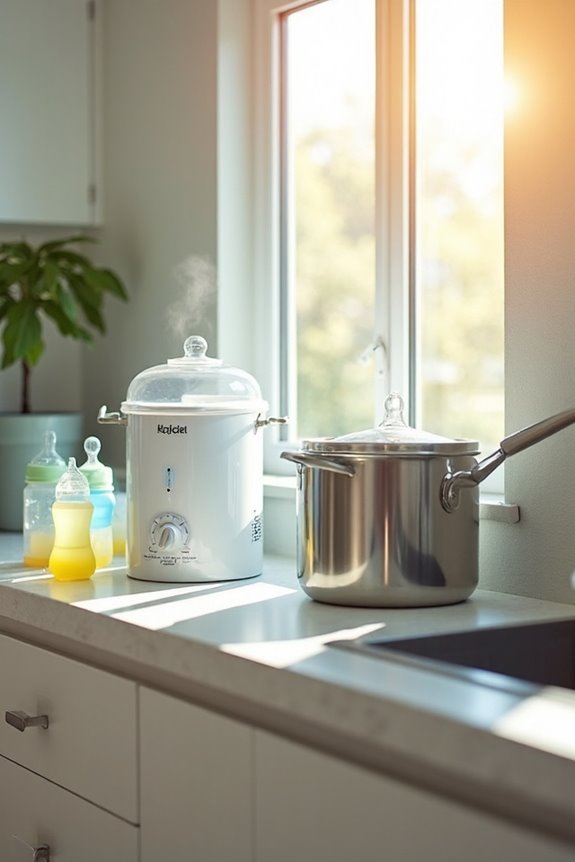
While ensuring the safety of our little ones by following proper sterilization practices, it’s important to consider the cost aspects of sterilization equipment. Our initial investment in a baby bottle sterilizer can range from under $50 to over $100. Choosing the right model depends on our budget and needs.
- Recurring Expenses: Some sterilizers incur costs for cleaning tablets, filters, or distilled water, while others are cost-free after purchase.
- Long-Term Savings: High-capacity, fully automatic models save time and reduce disposable needs.
- Versatility: Sterilizers with drying capabilities might justify a higher upfront cost.
- Budget-Friendly Options: Microwave sterilizers are affordable, fitting smaller budgets well.
Balancing cost with convenience ensures we make the best choice for our family’s needs.
Recommended Products

REUSABLE SILICONE, PLASTIC-FREE: This silicone microwave sterilizer bag for baby bottles is made from durable, food-grade silicone. BPA-free, plastic-free, and non-toxic, it’s the safe and reusable alternative for parents who want fast daily sterilization

REUSABLE SILICONE MICROWAVE STERILIZER BAG. Quickly sterilizes baby bottles and parts, breast pump parts, pacifiers, teethers, and more

REUSABLE SILICONE MICROWAVE STERILIZER BAG: Made from food-grade silicone. BPA-free, plastic-free and non-toxic, this bag provides parents with a safe, durable & fast sterilization for baby bottles, pump parts, pacifiers & teethers for everyday hygiene.
Choosing the Right Sterilization Method for Your Family
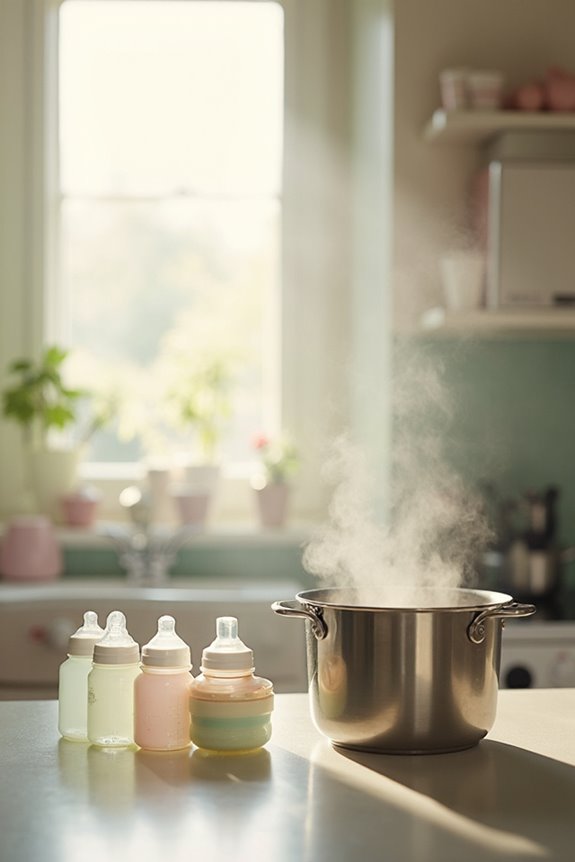
When it comes to choosing the right sterilization method for your family, it’s essential to weigh the options based on your specific needs and circumstances. Let’s consider the following factors:
- Newborn Safety: If your baby is under 3 months or has a compromised immune system, frequent sterilization is crucial. Electric steam or UV sterilizers might be best for their efficiency in reducing pathogens.
- Bottle Materials: Some methods, like microwave sterilizers, can damage certain bottle parts. Always check compatibility.
- Frequency and Ease: If you’re sterilizing often, electric steam sterilizers offer convenience. Philips Avent, for example, can handle multiple bottles and includes drying features.
- Environmental Concerns: UV sterilizers are energy-efficient and chemical-free. Cold water sterilization is another eco-friendly option.
Recommended Products

𝟒-𝐢𝐧-𝟏 𝐄𝐚𝐬𝐞𝐂𝐥𝐞𝐚𝐧 𝐁𝐨𝐭𝐭𝐥𝐞 𝐖𝐚𝐬𝐡𝐞𝐫 𝐏𝐫𝐨: The Grownsy Baby Bottle Washer automatically washes,...
Frequently Asked Questions
How Often Should Baby Bottles Be Sterilized?
We should consider sterilization frequency for optimal baby bottle care. For newborns and preemies, sterilize after each use. For infants under three months, daily sterilization works best. Let’s adapt as their immune systems strengthen and based on lifestyle.
What Is the Best Way to Store Sterilized Bottles?
Let’s ensure our sterilized bottles stay clean by storing them in airtight, food-grade containers. Using proper sterilization techniques and placing them on higher shelves will help keep them safe from contamination. We’ve got this—our little ones deserve the best!
Can I Sterilize Baby Bottles Made of Glass?
Can’t we all agree that glass bottles offer great benefits? They’re durable and perfect for various sterilization methods like boiling, steam, or microwave. Let’s embrace these methods to keep our little ones safe and healthy.
How Long Do Sterilized Bottles Remain Sterile?
Let’s chat about sterilization duration. Once we’ve sterilized bottles, they’re typically safe for 24 hours if stored correctly. But remember, bacteria growth can start once we open them, so use them promptly for our baby’s safety.
What Is the Impact of Sterilization on Bottle Nipples?
When we sterilize bottle nipples, it can affect their durability. Different sterilization methods might cause wear or release particles. Let’s choose methods wisely, balancing hygiene with nipple longevity, to ensure our little ones’ safety and comfort.