As an Amazon Associate, we earn from qualifying purchases. Some links on this site are affiliate links at no extra cost to you. Our recommendations are based on thorough research and editorial judgment.

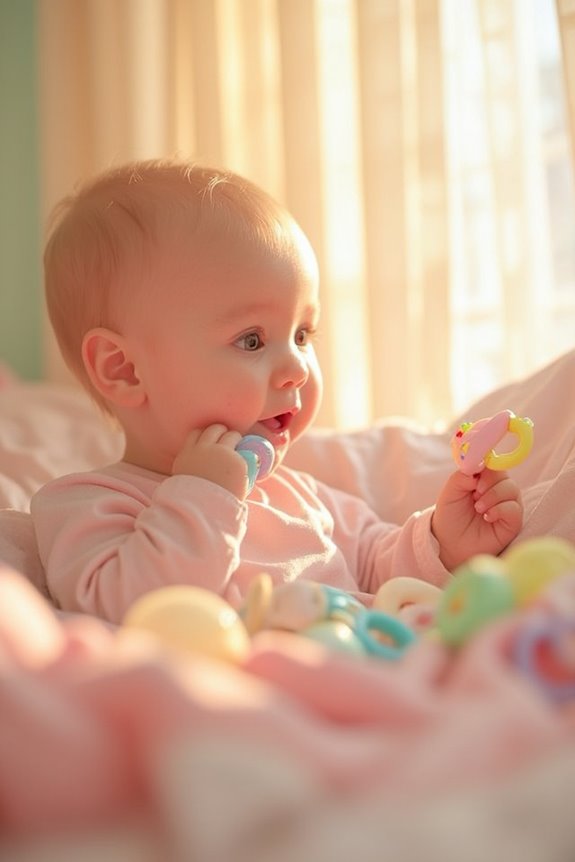
When Do Babies Start Teething? A Parent’s Guide

Most babies start teething around 6 months old, but some might begin as early as 3 months or as late as 12 months. It’s crucial to watch for signs like sore gums, drooling, and restlessness. We can help soothe our little ones with gentle gum massages, teething toys, and keeping them hydrated. Understanding the timeline can ease our worries. Stick with us to uncover more tips for navigating this important milestone in your baby’s development.
Key Takeaways
- Most babies begin teething around 6 months, but it can start as early as 3 months or as late as 12 months.
- The first teeth to emerge are the lower central incisors, typically between 6 to 10 months.
- Upper central incisors usually erupt between 8 to 12 months after the lower teeth.
- Teething symptoms may include sore gums, increased drooling, and disrupted sleep.
- Regular dental check-ups are important to ensure proper dental health as teeth develop.
You may be interested



Recommended Products

🍼【10-Piece Baby Rattles & Teethers Set】 This premium 10 baby toys set includes a variety of soft silicone teethers and gentle bell rattles. Designed to engage your baby’s senses (touch, sound, sight). Different shapes (rings, animals, easy-grip handles) help develop fine motor skills and hand-eye coordination for 0-3-6-12 months infants.

Innovative Cooling Relief: The Nippii freezable teething pacifier delivers soothing comfort for teething babies with a unique cooling effect that lasts up to 30 minutes. This freezer pacifier design ensures your baby’s gums are soothed without chilling the cheeks, face, or hands, so cooling relief stays exactly where your baby needs it.

Material Safety:Baby teething toys are made of food-grade silicone. Resistant to high and low temperatures, can be boiled, steam or refrigerated, -50° to 230°
Understanding the Teething Timeline
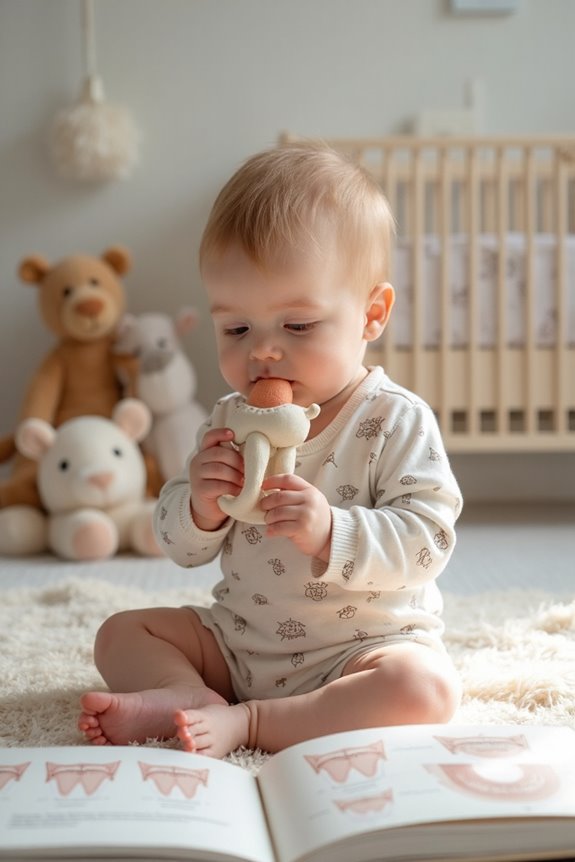
When we think about the teething timeline, it’s important to understand that every baby is unique, and their teething journey can vary quite a bit. Most babies start teething around 6 months, but some may begin as early as 3 months or as late as 12 months.
Here’s a quick overview of what to expect:
- 3-6 months: Teeth develop below the gums.
- 6-8 months: Lower central incisors emerge, often accompanied by drooling and irritability.
- 8-12 months: Upper central incisors erupt, which can be more uncomfortable.
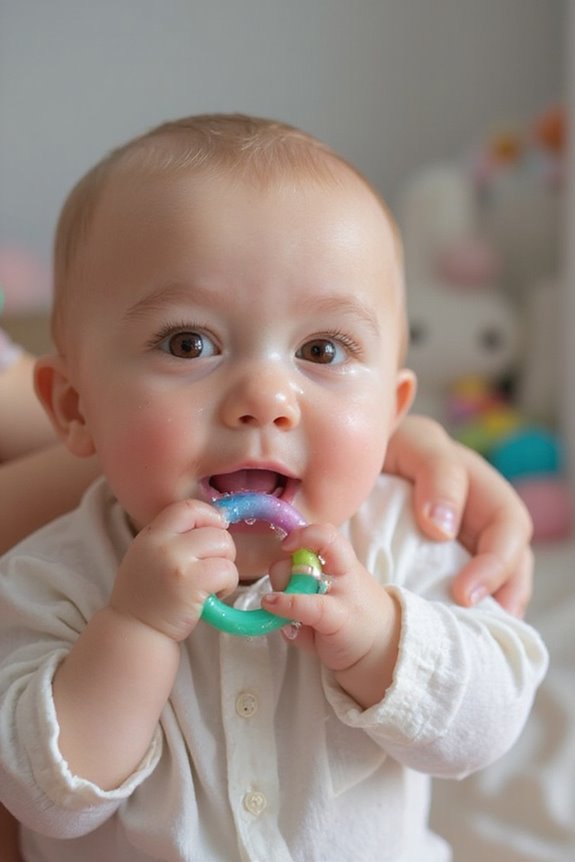
Let’s not fall for teething myths—like the idea that all babies experience severe pain. Instead, we can explore gentle teething remedies, such as chilled teething rings or soft foods, to help soothe our little ones through this natural process.
Signs and Symptoms of Teething
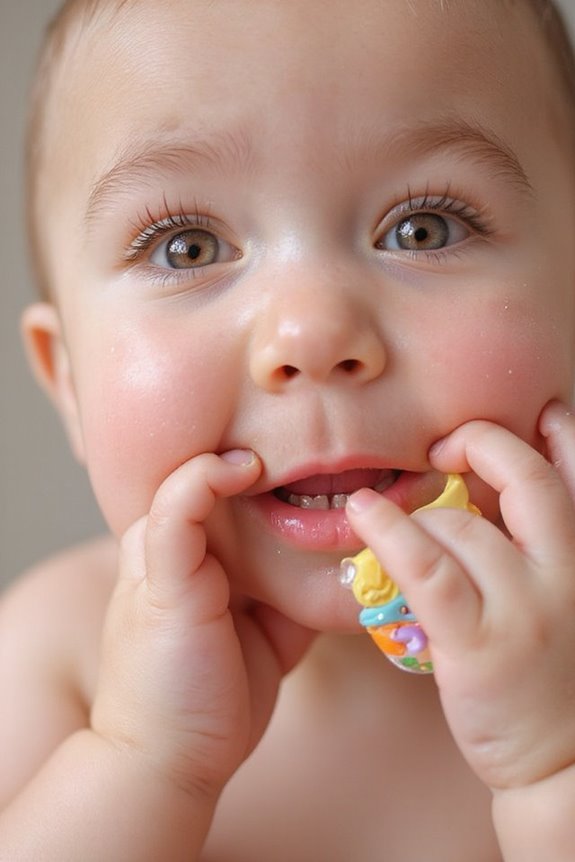
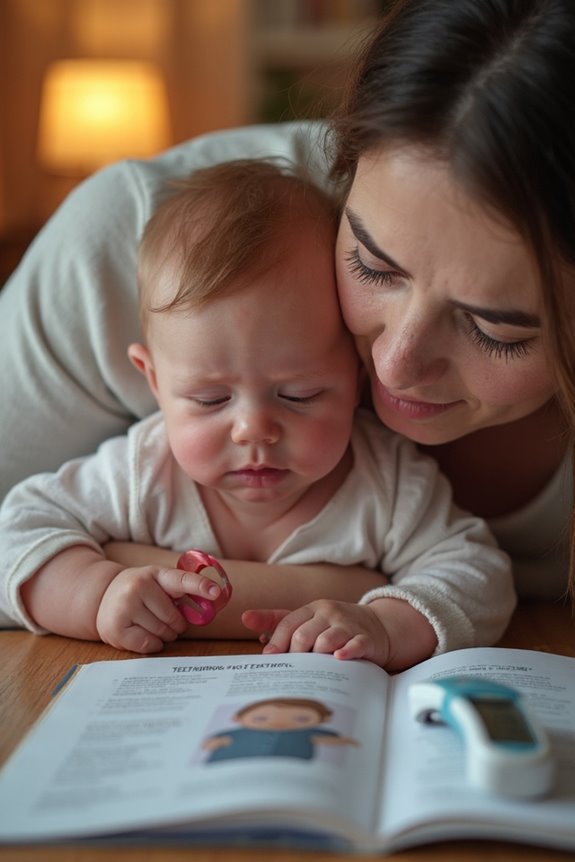
Teething can be quite a journey for both babies and parents, and recognizing the signs and symptoms is key to navigating this phase. We might notice some common indicators, such as:
- Sore gums: Look for red, swollen areas where teeth are emerging.
- Increased drooling: This can lead to a rash around the mouth.
- Chewing: Babies often gnaw on toys to relieve discomfort.
- Mild temperature: A slight rise, below 38°C, can occur.
- Disrupted sleep: Restlessness at night is common.
As we seek pediatric advice, remember that teething remedies can help ease these symptoms. However, if you see concerning signs, don’t hesitate to consult your healthcare provider for peace of mind.
Recommended Products

Safe & Healthy Teether for Babies 3-6 Months:Say goodbye to worries and hello to safe and healthy playtime! Our baby teething toys are made of high-quality 100% food-grade silicone materials that are PVC-free, lead-free, BPA-free, and latex-free, meet US and EU Toys Standard, baby girl boy newborn safe essentials. Plus, they're soft, pliable, and odor-free, making them perfect for babies 3 6 10 12 18 months old

Baby's Safety is Our Top Priority - This baby teething toy is made of food-grade silicone. We are committed to focusing on the HEALTHY development and HAPPINESS of your baby.
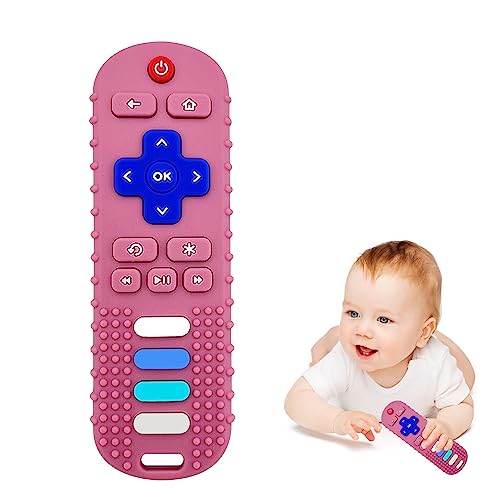
[Peace in Mind]: Our cute baby teething toys are made of food-grade silicone, non-toxic and BPA free. The soft and elastic material reduces the risk of oral injuries and is completely safe for infants, toddlers and newborns, suitable for 0-6 months and 6-12 months old babies. No need to worry about any safety problem. The silicone toddler teething toy is durable, yet soft on your baby's tender gums.
Caring for a Teething Baby
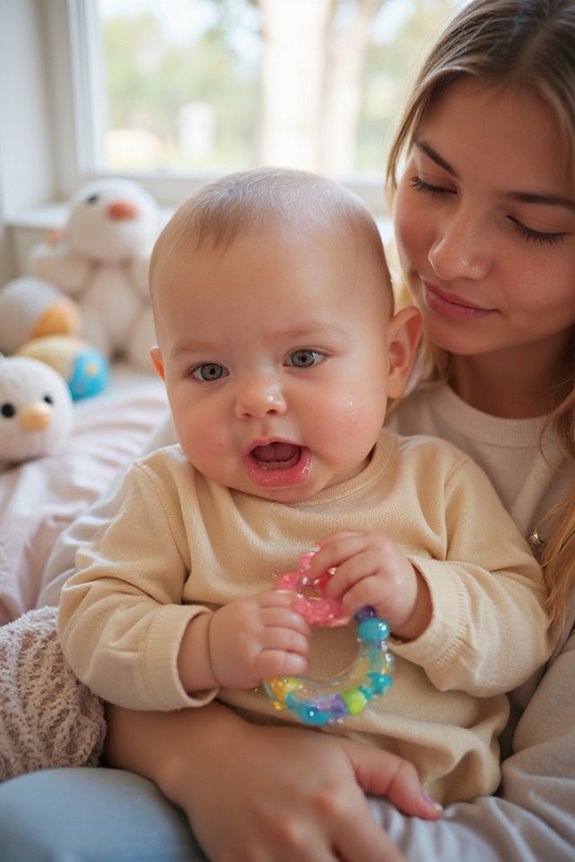
As we navigate the ups and downs of parenting, caring for a teething baby can feel overwhelming at times. To ease their discomfort, we can explore various teething remedies that promote baby comfort. Here are some helpful suggestions:
- Gum Massage: Gently massage their gums with a clean finger or damp gauze.
- Teething Toys: Offer firm, rubber teething toys—not frozen ones, as they can hurt the gums.
- Cold Objects: Provide a chilled pacifier or washcloth to soothe.
- Hydration: For older babies, cool water in a sippy cup can be refreshing.
Remember to create a calming environment, cuddle them often, and maintain their routine. If you have concerns, don’t hesitate to consult a pediatrician for guidance.
Recommended Products

Water-filled teethers soothe baby’s gums

Baby Teething Relief - Momcozy baby teether toy is used for baby teething relief, it’s a kind of teether, a food grade silicone teething toy to soothe the sore gum, suitable for babies 0-3 months, 0-6 months and 6-12 months, Baby essential shower gift

COOLING TEETHING RELIEF: Each teether is filled with purified water and can be placed in the refrigerator for a soothing, cool sensation that helps reduce teething discomfort. The chilled surface soothes sore gums, offering relief for teething babies
The Eruption of Different Teeth
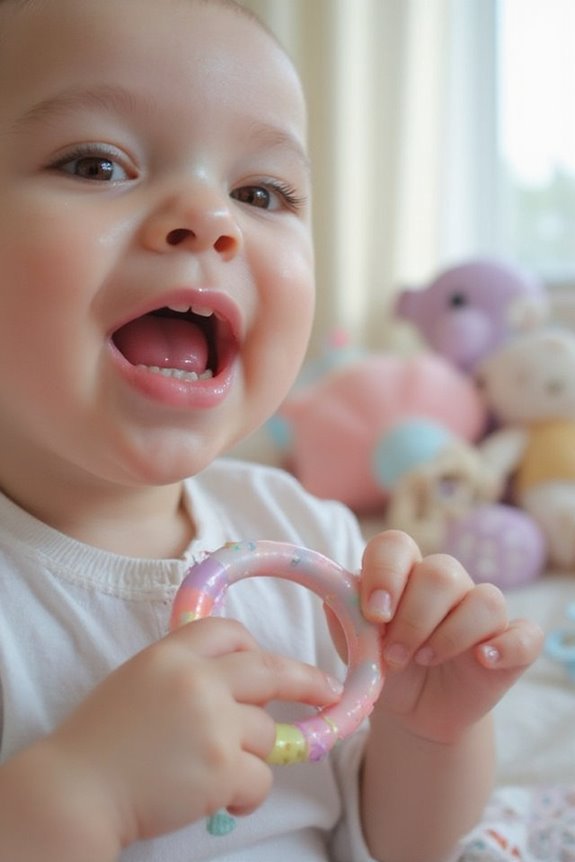
The eruption of different teeth in babies follows a general timeline that can help us anticipate when those little chompers will make their appearance. Typically, lower central incisors are the first to emerge, usually between 6 to 10 months. Shortly after, we can expect the upper central incisors to appear around 8 to 12 months.
The timeline continues with:
- Lateral incisors: 9 to 13 months
- First molars: 13 to 19 months (top), 14 to 18 months (bottom)
- Canines: 16 to 22 months
- Second molars: 25 to 33 months (top), 23 to 31 months (bottom)
Long-term Dental Development and Health
While we often think about the immediate effects of teething, it’s important to consider how our children’s dental health can influence their long-term development. Untreated dental caries can affect over 530 million children worldwide, highlighting the need for early intervention.
Here are some essential tips for ensuring good long-term dental health:
- Schedule regular dental check-ups to catch issues early.
- Teach your little ones proper oral hygiene, like brushing and flossing daily.
- Be mindful of their diet, as sugar intake significantly impacts dental health.
Recommended Products

MAKE FLOSSING FUN: Attractive giraffe-shaped design and fun colors will make flossing a fun activity for your kids. The distinctive design not only adds excitement to their daily dental routine but also ensures their oral health is well taken care of.

Healthy oral care habits and routines start early with DenTek Kids Fun Flossers

The Doctor’s Interdental BrushPicks 2-in-1 have soft bristles on one end that brush between teeth and a toothpick on the other end to safely remove food debris from teeth, braces, and permanent retainers
Frequently Asked Questions
Can Teething Cause Severe Illness or Fever?
We understand how concerning it is when our little ones experience discomfort. However, teething symptoms don’t cause severe illness or fever. True fever causes require our attention, so let’s keep a watchful eye together.
Are There Any Home Remedies for Teething Discomfort?
Oh, who needs a pharmacy when we’ve got natural remedies? We can explore soothing techniques like chilled teething rings, gum massages, and cold washcloths to help ease our little one’s discomfort during this challenging time.
How Can I Tell if My Baby Is Teething or Unwell?
When we notice our baby’s behavior changing, it’s vital to distinguish between teething symptoms and signs of illness. Teething usually brings mild discomfort, while persistent fussiness or fever could suggest something more serious.
Is It Normal for Teething to Disrupt Sleep Patterns?
Over half of parents report sleep disturbances during teething signs, yet studies show no significant difference in sleep patterns. We might be attributing normal variations to teething, so let’s stay mindful of our perceptions.
What Should I Avoid Giving My Baby During Teething?
When our little ones are teething, let’s avoid cold foods and hard toys. Instead, we can offer chilled washcloths and soft rubber toys for comfort. Together, we’ll keep their gums happy and safe.
References
https://www.pampers.com/en-us/baby/teething/article/baby-teeth-chart
https://www.orajelkids.com/en/resources/teething-chart-see-when-your-babys-teeth-will-come-in
https://www.medicalnewstoday.com/articles/baby-teeth-chart
https://www.healthychildren.org/English/ages-stages/baby/teething-tooth-care/Pages/Babys-First-Tooth-Facts-Parents-Should-Know.aspx
https://www.colgate.com/en-sa/oral-health/infant-oral-care/baby-teething-timeline
https://www.kidsdentalonline.com/dental-topics/baby-dental-topics/stages-teething-helpful-hints/
https://my.clevelandclinic.org/health/articles/11179-teething-teething-syndrome
https://www.tylenol.com/children-infants/pain-relief/baby-teething
https://www.orajelkids.com/en/resources/teething-signs-and-symptoms
https://www.pampers.com/en-us/baby/teething/article/teething-symptoms-for-babies
Related Teething & Oral-Care Guides
- 10 Soothing Ways to Help Your Teething Baby
- When Do Babies Get Their First Molars?
- Can a Baby’s Teething Cause a 103°F Fever?
- All Teething & Oral Care guides
Recommended Products

BABY TEETHING TOYS: Our teething toys are perfect for soothing sore gums during every stage of baby teething; Place in refrigerator to provide a soothing, cooling sensation...