As an Amazon Associate, we earn from qualifying purchases. Some links on this site are affiliate links at no extra cost to you. Our recommendations are based on thorough research and editorial judgment.

When Do Babies Start Pulling to Stand? A Milestone Guide

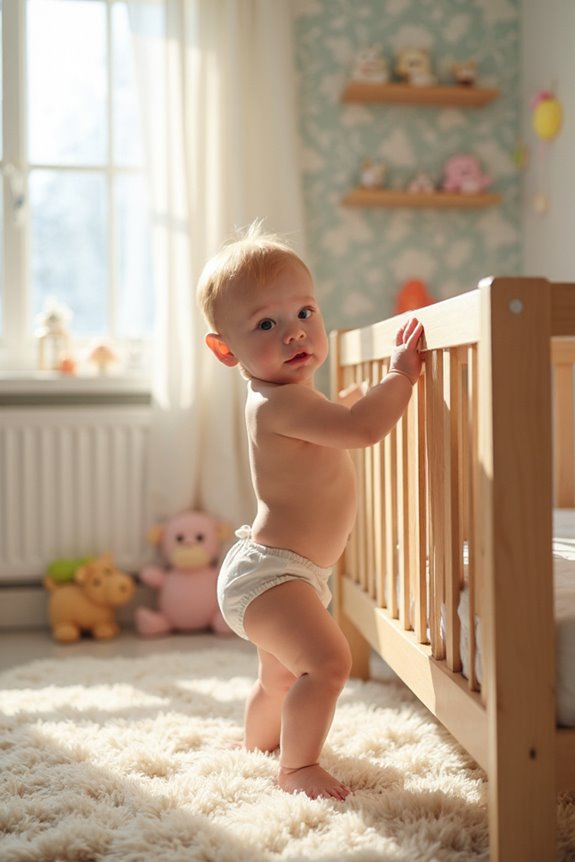
Babies typically start pulling to stand between 7 and 12 months, with the average milestone achieved around 9 months. This development requires building core strength and coordination, often supported by furniture. You’ll likely notice early signs around 6-7 months, like bearing weight on their legs. Encouragement and safe environments play a vital role in this process. Understanding each child’s unique pace helps us navigate their journey, and there’s more to uncover about supporting this exciting milestone.
Key Takeaways
- Babies typically begin pulling to stand between 7 and 12 months of age.
- Most infants start pulling to stand around 9 months, though individual timing varies.
- Tummy time and crawling enhance the core strength needed for standing.
- Safe furniture and supportive environments encourage babies to practice standing.
- Caregiver support and encouragement are crucial for building confidence in standing.
Typical Age Range for Pulling to Stand
You may be interested

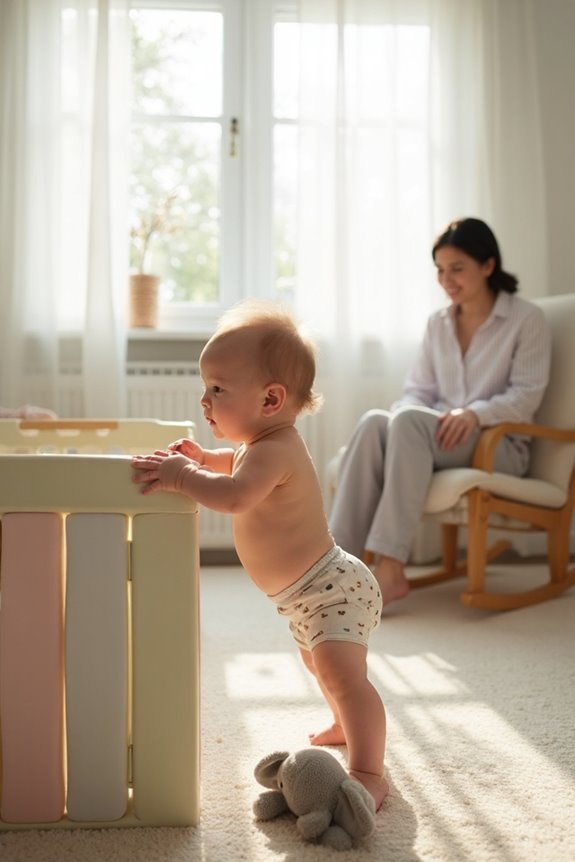
When it comes to babies pulling to stand, many parents wonder, “When should we expect this to happen?” Typically, you’ll see this exciting milestone occur between 7 and 12 months of age. This developmental stage is filled with curiosity and exploration. Most infants start around 9 months, but it varies—some might pull up as early as 7 months, while others take until 10 months.
In these early stages, pulling techniques often involve using furniture like sofas or tables. Babies use these structures to test their leg strength and muscle coordination. We can support them by offering our hands or ensuring they have access to safe, sturdy objects. Each child’s journey is unique, so let’s celebrate their progress at their own pace!
Key Physical Developments for Standing
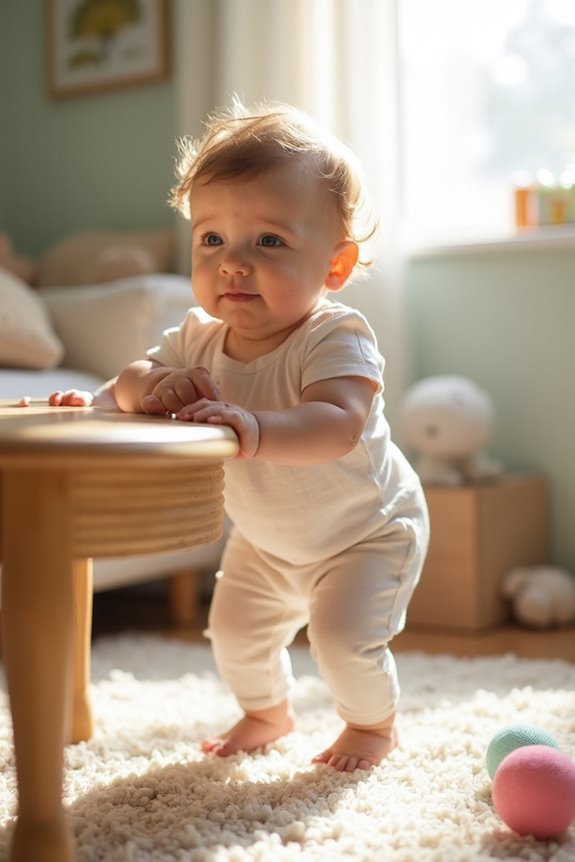
Understanding the key physical developments that lead to a baby standing up is like piecing together a puzzle. We need to focus on core strength, muscle development, and balance improvement. Babies begin to develop leg strength as newborns, gradually straightening from a bow-legged stance. Their posture matures, paving the way for standing.
- Core Strength and Muscle Development: Essential for balance, babies’ core muscles strengthen with time, supporting their upright posture.
- Balance Improvement: Tummy time enhances balance and coordination, crucial for standing.
- Joint Maturation and Sensory Integration: As joints mature, they support standing, while sensory integration helps maintain balance.
Through motor skills like lifting their heads and moving limbs, babies learn to stand confidently, a milestone filled with pride.
Recommended Products
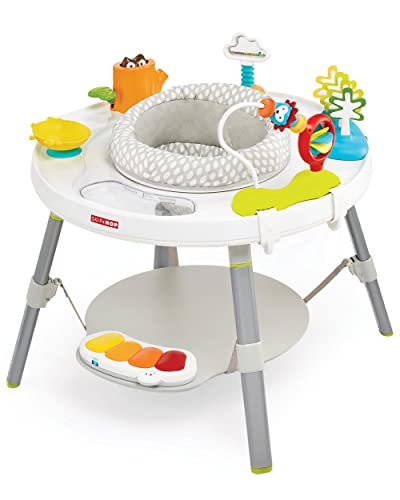
Grows With Baby in 3 Stages: Designed in collaboration with a pediatrician for babies who can hold their head upright unassisted and are not yet walking or climbing out, our baby activity center supports little ones from 4 months up to 25 lbs. It transitions seamlessly through three developmental stages: Sit, Swivel & Play for early engagement, Cruise & Interact to encourage standing and movement, and finally converts into a sturdy toddler activity table with a smooth plastic surface for coloring, crafts, snacks and imaginative play.
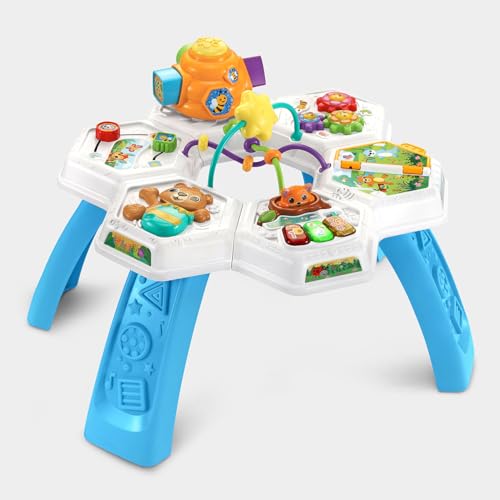
Explore seven developmental play zones on this buzzworthy activity table that transforms from floor play to standing play as they grow

Converts from Activity Center, to Activity Play Table, and to a Flat Table
Motivation Behind the Milestone
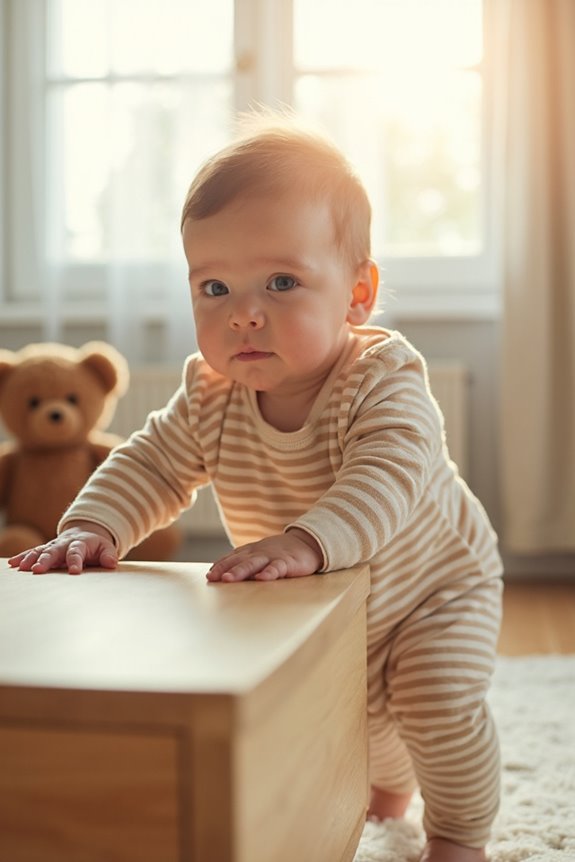
As we explore how babies start pulling to stand, we can see it’s not just a physical feat, but a captivating journey of growth. This milestone is driven by several motivating factors:
- Cognitive Growth: Problem-solving and motor planning play critical roles, allowing babies to navigate their environment effectively.
- Independence and Confidence: Standing opens up a new world, fostering a sense of autonomy.
- Muscle Strengthening: The effort builds essential leg, hip, and core muscles, preparing them for walking.
- Balance and Coordination: Developing these skills is crucial for future motor milestones.
Each baby’s journey is unique, shaped by their experiences. By understanding these motivations, we can better support and encourage their growth, celebrating each small victory as they conquer this milestone.
Early Signs of Readiness for Standing
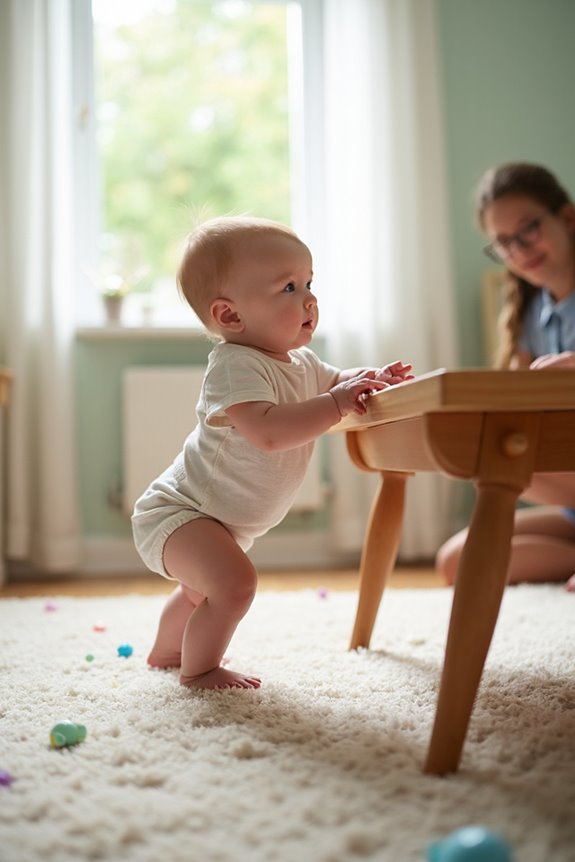
One of the first signs that your baby is ready to start practicing standing is when they begin to show interest in pulling themselves up on furniture. As babies move through their crawling progression, they naturally develop the core strength needed for balance and stability. Let’s look at what else signals this exciting milestone:
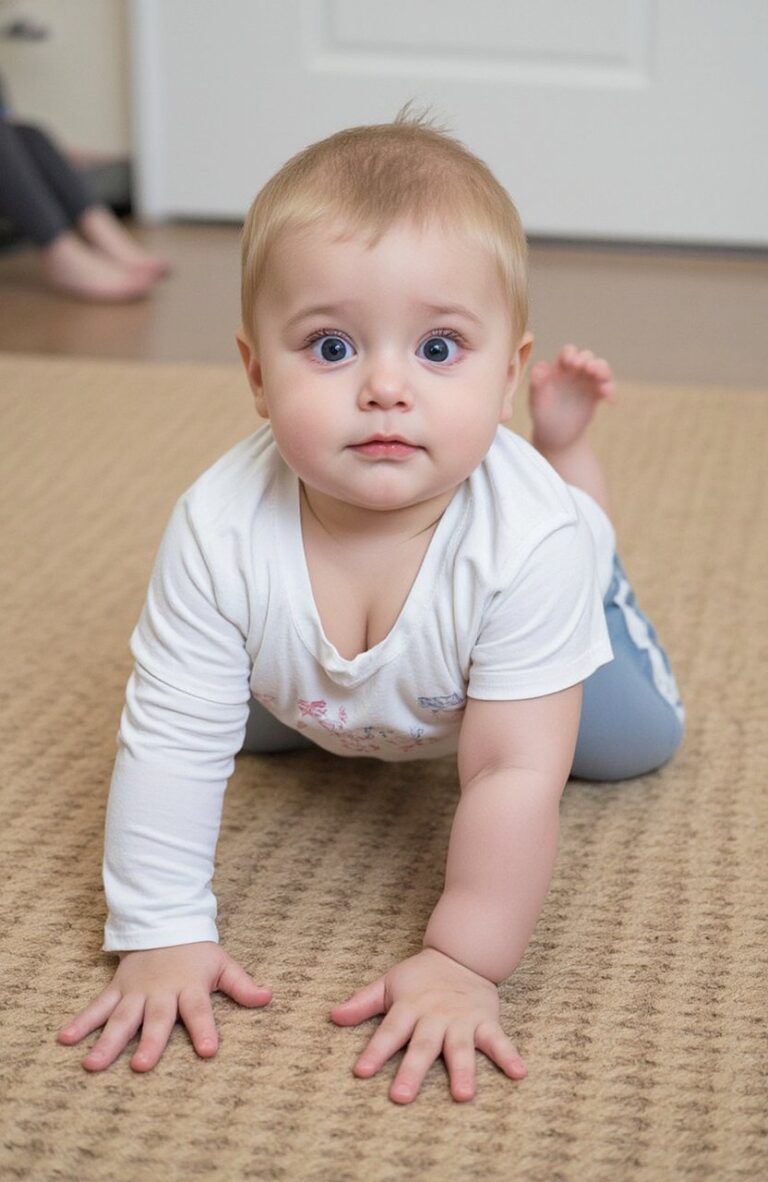
- Crawling on Hands and Knees: This advances core strength, setting the stage for standing.
- Leg Weight Support: By 6-7 months, most babies can bear their weight on their legs with support.
- Pulling Up Attempts: Around 9 months, babies typically try to pull themselves up on furniture.
- Balance: Successfully balancing while pulling up indicates readiness.
Recommended Products

5 colors,3.5x7.5inch. fun and helpful for toddlers ,vivid and bright colors are easy to attract your babies' attention, and the colors are not easy to fade, will maintain their brightness for a long time.

Montessori Mirror with Pull Up Bar: Our baby pull up mirror is designed to captivate your baby's curiosity. The shatterproof safety mirror and sturdy solid wooden bar motivate infants to stand and walk, more authentic wood feel and look, enhancing self-awareness and physical coordination.
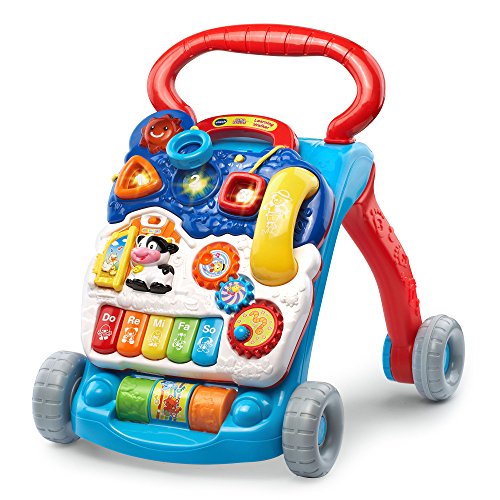
Removable Tray: The activity-packed, detachable panel is perfect for babies who can sit up; it can also re-attach to the walker for on-the-run fun on both carpet and bare floors
Importance of Support Systems
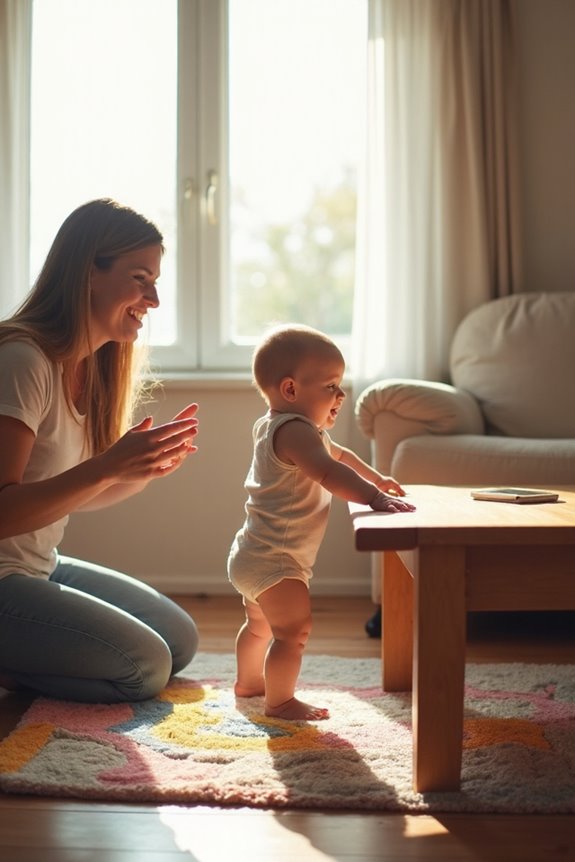
A baby’s journey to standing is packed with exciting milestones, and having the right support systems in place is crucial for their development. We know that physical and emotional support helps build your little one’s confidence and strength. There are several support types to consider:
- Physical support systems: Caregivers play vital roles, offering hands-on help by holding hands or supporting the waist.
- Environmental supports: Safe furniture and surfaces allow babies to pull up and build muscle strength.
- Encouragement through play: Placing toys above eye level motivates standing and reaching.
As balance and coordination improve, we gradually reduce assistance, empowering babies to stand independently. Embracing these supports fosters a nurturing environment, ensuring a confident, safe transition towards standing.
Recommended Products

Panda-themed interactive push walker & activity center that grows with baby from sitting to pulling up and walking all around

Quality Material: Baby toddler stand up rings are made of braided strap and premium plastic, sturdy rings and wear-resistant straps make our products can be used for a long time. Healthy material, safe and assured without any harmful material.
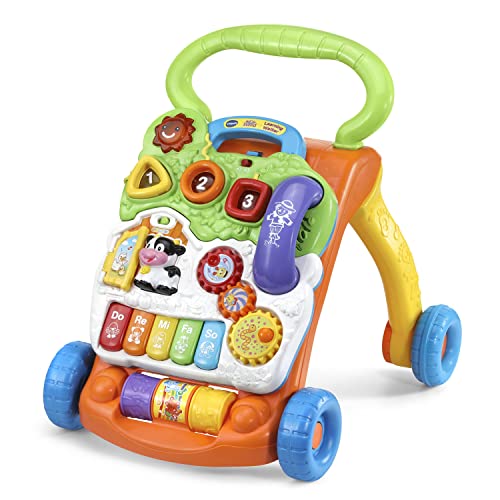
Removable Tray: The activity-packed, detachable panel is perfect for babies who can sit up; it can also re-attach to the walker for on-the-run fun on both carpet and bare floors
Encouraging Safe Practice
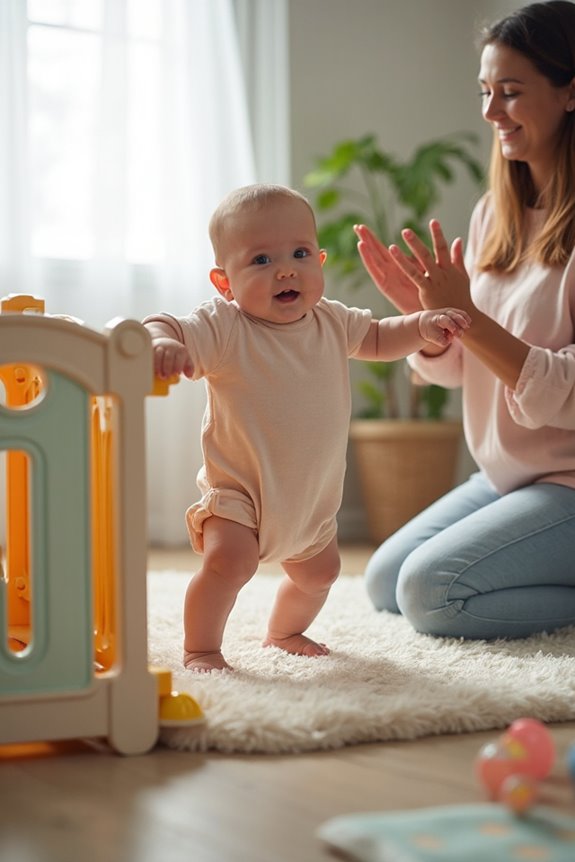
Creating a safe practice environment for your baby to start pulling to stand is essential to ensure their development and prevent accidents. We can begin by ensuring furniture stability—secure those wobbly tables. Clear floor space is crucial, so let’s remove small toys and slippery surfaces. Cover sharp corners to minimize injury risk. Opt for flat surfaces, keeping your little one off elevated areas. Stair safety is vital, so use baby gates.
Encouragement techniques can guide your baby’s progress. Place toys on higher surfaces to inspire pulling up. Encourage floor play to build strength and coordination. Use low surfaces like coffee tables for practice. Verbal support with praise boosts their confidence. Gradually increase standing challenges to promote growth and independence.
Recommended Products

Space-Saving Baby Gate Retractable: Cideny 34" tall pet gate extends up to 55" wide to suit various spaces. When not in use, the mesh fully retracts, keeping walkways clear and saving space without disrupting your home's style

Accommodates Most Openings: Babelio 26-43" hardware mount baby gate is specifically designed for stairs and bannisters, and the width of the safety gate can be adjusted to fit top or bottom of stairs, doorways and hallways. And 28 inch tall make it perfect for toddlers and medium pet

Versatile Safety Solution – Perfect for keeping your infants, toddlers, and pets safe, this retractable gate is ideal for use around stairs, doorways, and hallways, offering peace of mind throughout your home.
Transitioning to Independent Standing
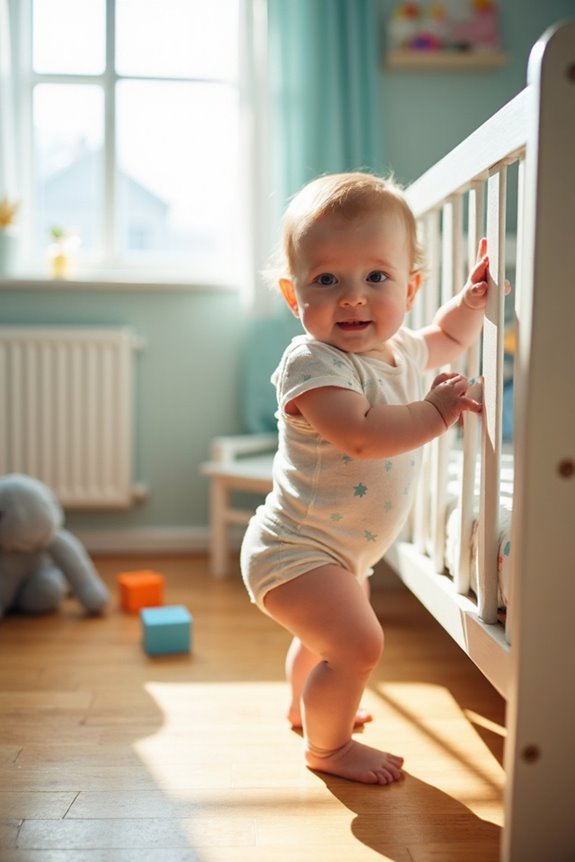
As your baby moves from pulling to stand towards independent standing, it’s an exciting time for both you and your little one. Together, we witness their journey from needing initial support to making those precious independent movements. This phase not only builds balance and strength but also sharpens motor skills, setting the stage for future milestones.
Here’s how we can facilitate this transition:
- Support Structures: Use sturdy furniture or support structures to practice standing.
- Encourage Movement: Place toys just out of reach to encourage your baby to move and improve balance.
- Celebrate Small Wins: Each brief moment of independent standing is a step forward.
Recommended Products
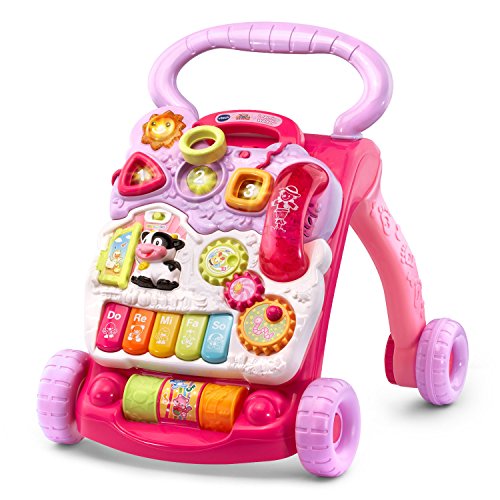
Removable Tray: The activity-packed, detachable panel is perfect for babies who can sit up; it can also re-attach to the walker for on-the-run fun on both carpet and bare floors

Soft & Breathable: Made from super soft crystal velvet fabric and filled with high-elastic PP cotton for maximum comfort.
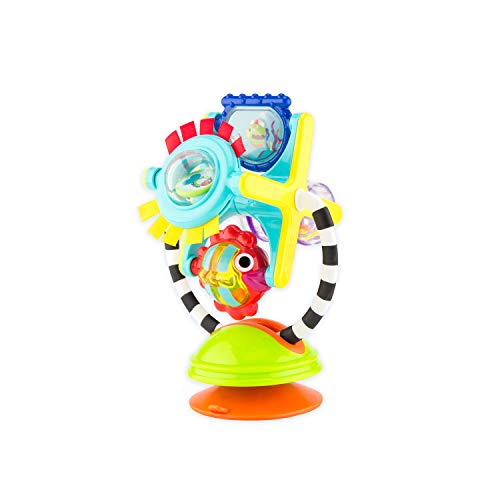
2-in-1 toy; use suctioned to a table or high chair tray, or remove base for floor play
Understanding Developmental Variability
While each child embarks on their own unique developmental journey, understanding the variability in these milestones can help us appreciate the normal range of progress. This variability arises from several factors, including genetic influences and environmental conditions. Let’s explore some key points:
- Developmental Differences: Children develop at different rates. Some may crawl sooner, while others might skip crawling entirely and move directly to standing.
- Genetic Influences: A child’s genetic makeup plays a significant role in how quickly they achieve milestones.
- Environmental Factors: Home environment and parental interaction significantly impact developmental outcomes.
Frequently Asked Questions
What Should Parents Do if a Baby Doesn’t Show Interest in Standing?
If we notice our baby isn’t showing interest in standing, let’s address parental concerns by consulting a healthcare provider. This can help identify potential developmental delays and provide guidance on encouraging movement and exploration.
Are There Specific Exercises to Help Babies Stand Sooner?
Rome wasn’t built in a day, and our baby’s strength won’t be either. Standing exercises like squat-to-stand play and kneeling can boost their development. Let’s create a nurturing environment where they practice and thrive together.
How Can Siblings Be Involved in Encouraging Standing Milestones?
Let’s make standing milestones fun with sibling interactions! During playtime activities, older siblings can guide and motivate the little ones. They’ll love engaging together, creating a supportive environment that encourages standing up and reaching new heights.
What Are Common Myths About Babies Learning to Stand?
We often hear baby myths like “all babies stand at the same age” or that standing’s simple. Let’s debunk these standing misconceptions together, understanding it’s a complex skill requiring strength, coordination, and practice. We’re in this journey together!
How Does Standing Impact Other Areas of a Baby’s Development?
Let’s explore how standing impacts a baby’s growth. It boosts cognitive development and enhances physical coordination, offering a fresh perspective and encouraging exploration. Through each wobbly step, we witness their blossoming curiosity and burgeoning confidence.